Apple AI Reboot at WWDC 2026: Siri Strategy and Global AI Chip Competition
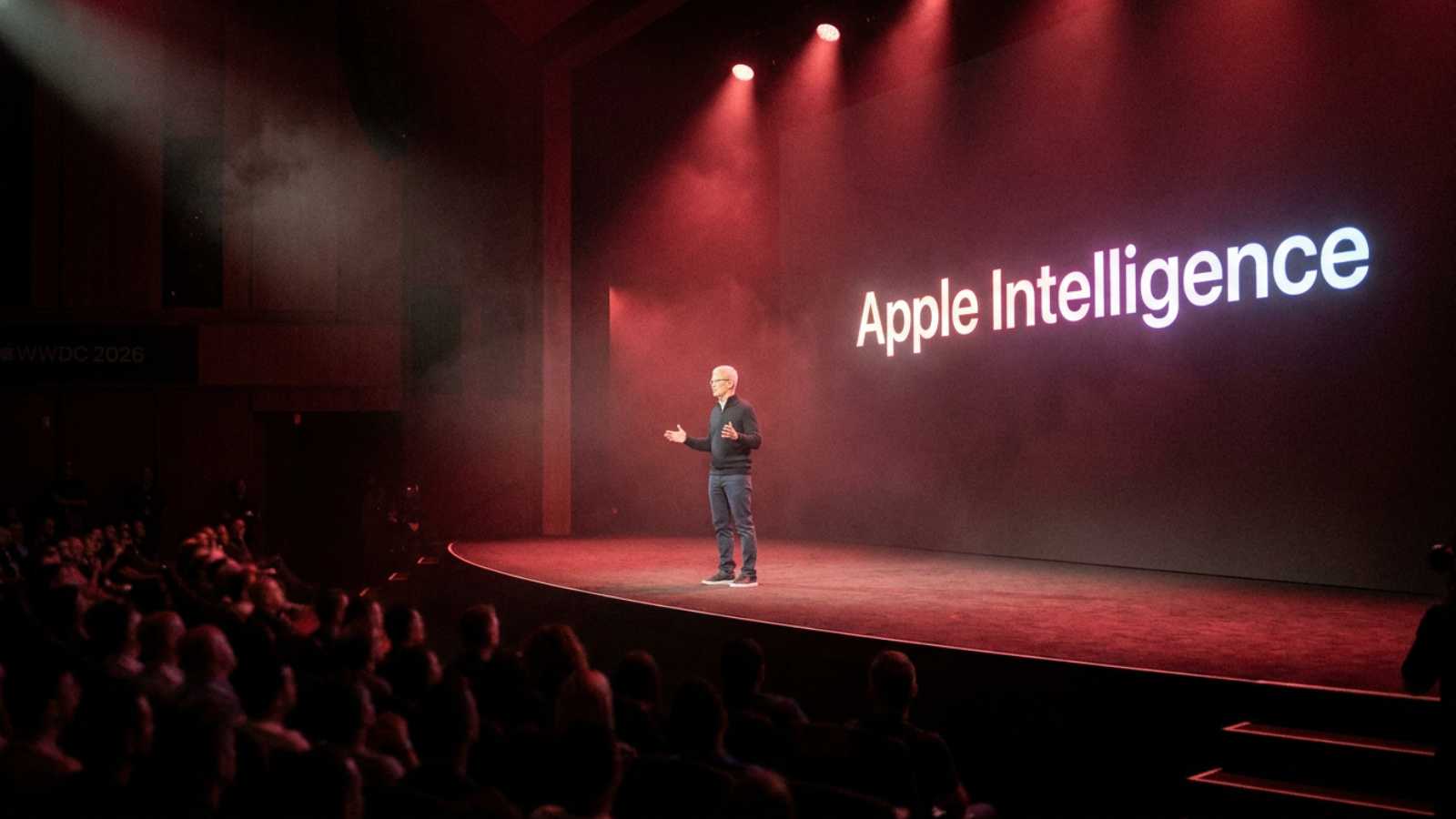

When Apple Says 'Intelligence' Again, This Time It's Serious
On 8 June 2026, the WWDC keynote in Cupertino delivered a message that no one following the global AI competition could dismiss: Apple had chosen to play more aggressively.
Bloomberg reported that Apple unveiled a next-generation AI platform centered on a completely overhauled Siri. The scope was substantial, covering iOS 27, macOS 27 Golden Gate, watchOS 27, and visionOS 27 simultaneously. Not one product, not one feature. This was a full-scale ecosystem strategy that market analysts had long anticipated.
The context needs to be clear. For the past few years, Apple lagged behind its peers in consumer-facing AI. OpenAI solidified ChatGPT as the industry reference since late 2022. Google integrated Gemini into nearly every layer of its products. Microsoft rebuilt Office with Copilot. Apple Intelligence unveiled in 2024 received unsatisfying responses from both users and the developer community. Bloomberg itself used the phrase "shaky start" to describe Apple's AI journey before WWDC 2026. Investors began questioning whether Apple could catch up.
The announcement on 8 June 2026 was Apple's official answer to those questions.
New Siri: From Voice Assistant to Intelligence Core
For more than a decade, Siri had been a consistent target of criticism. Too limited, too often misunderstanding context, and far from the conversational AI capabilities offered by competitors. When ChatGPT showed the global public that AI could engage in deep discussion while producing substantive output, Siri's weaknesses became harder to hide.
What was announced at WWDC 2026 was architecturally different. Siri in Apple's new platform is not merely an enhanced voice assistant. Based on Bloomberg's reporting, this is a fundamental overhaul that positions Siri as an intelligence core connecting every layer of Apple's ecosystem, from hardware to OS to third-party applications.
This shift has concrete implications. The new generation Siri is designed to understand cross-application context: reading conversations in Messages, matching them with Calendar events, pulling references from Mail, and generating responses truly relevant to the user's specific situation. Not smarter search. Not a chatbot pasted onto the home screen. This is an effort to build a personal context model running on hardware already used by more than 2 billion active users globally.
"Apple is entering an era where AI advantage is not just about model quality in the abstract, but about how deeply user context is understood and integrated into every cross-device interaction."
This approach differs structurally from OpenAI and Google. ChatGPT still largely operates as a separate interface that must be actively opened. Gemini is integrated into Google's existing ecosystem, but still depends heavily on the cloud. Apple plays on a field that theoretically only they can play on: a closed ecosystem with full control from silicon chip to application layer, enabling deeper on-device processing alongside more granular privacy management.
Four Platforms, One Intelligence Layer
What makes the WWDC 2026 announcement different from previous iterations is the consistency of its scope. Apple is not updating just one platform. All major platforms are updated simultaneously.
iOS 27 is the platform with the largest user base, and this is where the newest Siri will be tested most heavily by the public. The cross-application integration that Bloomberg reported becomes the primary differentiator separating Apple's approach from conventional chatbots.
macOS 27 Golden Gate, a name referencing San Francisco's iconic bridge, brings the intelligence layer to the desktop and laptop ecosystem. This is particularly important for the professional and developer segments, two groups that have more often used web-based AI tools like Claude, ChatGPT, or Gemini rather than Siri.
watchOS 27 brings the most unique dimension among the four platforms. Apple Watch already has rich health data: heart rate, sleep patterns, daily physical activity, even blood oxygen data. AI integration in watchOS is not merely a smarter voice assistant, but the potential for health intelligence that can deliver personal insights based on longitudinal data accumulated over years.
visionOS 27 for Apple Vision Pro is a long-term bet. Spatial computing is still in very early adoption phase, but integrating AI into this platform now is the foundation for scenarios 3 to 5 years out.
Chip as Foundation: Apple Silicon and On-Device Inference Advantage
Apple's AI strategy cannot be understood separately from its chip strategy. Since the transition from Intel to Apple Silicon in 2020, Apple has built the M-series line for Mac and A-series chip for iPhone and iPad with neural engines continuously upgraded each generation. This is not merely a marketing differentiator. This is competitive infrastructure built over years.
On-device inference advantage is Apple's strongest card in the AI race right now. While most players depend on cloud computing to run AI models, Apple built an ecosystem where sufficiently powerful models can run directly on user devices. The implications are significant for 3 things simultaneously: far lower latency because there is no round-trip to a server, better privacy protection because data never leaves the device, and functionality that keeps working even without internet connection.
The latest generation chips supporting the new WWDC 2026 AI platform will be Apple's hidden weapon in the premium market. Each new generation of Apple device arriving with the latest chip will bring deeper AI capability, and that creates an upgrade incentive competitors based on cloud do not have.
Competition Map: Different Class, Different Battle
The wrong way to read this competition is by comparing AI model capabilities directly, as if this were a benchmark competition. That is not the battle Apple chose.
| Strategic Dimension | Apple (WWDC 2026) | OpenAI | Google Gemini | Microsoft Copilot |
|---|---|---|---|---|
| Core Model | Siri AI (on-device + hybrid cloud) | GPT family (cloud-first) | Gemini (cloud + Pixel) | Copilot (Azure-backed) |
| Hardware Control | Full (chip + OS + app) | None | Partial (Pixel, TPU) | Partial (Surface, Azure) |
| Privacy Priority | On-device, data stays on device | Cloud-dependent | Mixed | Mixed |
| Default Distribution | 2 billion+ active devices built-in | Opt-in subscription | Integrated into Android/Search | Integrated into Office 365 |
| Closed Ecosystem | Yes, full control | No | Limited (Android fragmented) | No |
| Primary Monetization | Premium hardware + services | ChatGPT Plus/Pro/Enterprise | Google One + ads | Microsoft 365 Copilot license |
| Core Strength | Massive distribution + privacy + loyalty | Model quality + innovation speed | Data scale + search integration | Enterprise productivity |
The most critical column for investors is "Default Distribution". Apple does not need to convince users to download a new app or subscribe to an additional service to distribute its AI platform. Every iOS, macOS, watchOS, and visionOS update users receive is a direct delivery vector for the latest Siri. This is a distribution advantage OpenAI does not have, and that only Google has partially through Android and Chrome.
The positioning above is not an absolute claim about model superiority, but a framework for understanding why Apple moves with an ecosystem integration strategy rather than chasing benchmark model competition. Apple's most difficult-to-replicate competitive advantage is not how technically smart Siri is, but how deeply Siri embeds itself into user digital life already locked into its ecosystem.
Real Risks: Between WWDC Ambition and Field Execution
WWDC is a developer conference, not a finished product launch. What was announced yesterday is capability, roadmap, and integration promise. Execution is a different story.
Apple has a mixed track record in this area. Apple Intelligence 2024 was announced with enthusiasm, but several features took months to release, some arrived with significant limitations, and Bloomberg's phrase "shaky start" is not a judgment that appeared without basis. There is a gap between what appears on the keynote stage and what users feel in real life.
Risk 1: Demo vs Real Product Gap WWDC demonstrations are carefully staged. Edge cases, latency issues, and failure modes do not show on stage. The latest Siri appearing smooth at the keynote could behave very differently when confronted with language variation, accents, context, and devices from 2 billion active global users. A poor experience here directly damages the newly built narrative.
Risk 2: Privacy vs Capability, a Real Trade-off Apple's on-device approach is both strength and limitation. AI models running entirely on-device have capacity constraints compared to cloud models that can use essentially unlimited compute. Maintaining balance between competitive AI capability against GPT-4 or Gemini and the privacy commitment already established as Apple's brand promise is not a trivial challenge.
Risk 3: Developer Adoption Rate The best AI platform is irrelevant if developers do not build on it. Apple must ensure that the API and framework for this new generation Siri AI are easy and compelling for adoption by the existing developer ecosystem. Friction here slows the gap between WWDC announcement and finished product truly felt by end users.
Risk 4: Competitors Do Not Stop Moving OpenAI, Google, Anthropic, and Meta are not standing still waiting for Apple to catch up. AI models continue evolving at a pace unprecedented in tech industry history. What today feels like a major leap could look incremental 12 months from now if competitors move faster at the model frontier.
Risk 5: AI Regulation in Major Markets The EU AI Act is in implementation phase. Governments across major markets are beginning to enforce new rules for AI running on consumer devices. Apple must navigate complex regulatory landscape while maintaining user experience consistency across geographies.
Signal for Investors: What Actually Changed
For equity investors positioning portfolios around the AI theme, WWDC 2026 offers several signals that need careful unpacking.
What changed fundamentally is narrative and positioning. Apple can no longer be accused of being absent from the consumer AI race. A next-generation AI platform integrated across its entire OS lineup is a clear statement about ambition and resource commitment. This affects analyst sentiment, medium-term price targets, and Apple's ability to maintain premium pricing amid intensifying global smartphone competition.
What has not changed is execution. Bloomberg captured announcement, not a finished product in users' hands. Between the WWDC announcement and impact on Apple's revenue sits a gap filled by developer adoption rate, user behavior change, and Apple's ability to maintain its premium value proposition.
1 metric worth monitoring through Q3 and Q4 2026: will this new AI platform become a driver of a new iPhone upgrade cycle. Each iPhone generation needs a "killer feature" that pushes users to upgrade from older devices. If the new generation Siri AI proves significantly more superior on the latest devices compared to iPhones 2 or 3 generations back, that could activate an upgrade wave with direct impact on Apple's revenue figures.
Apple's new AI platform strengthens its ecosystem moat and shifts narrative from "lagging behind" to "strategic differentiation." But direct revenue impact depends on 3 things: developer adoption speed, execution quality post-WWDC in real users' hands, and ability to drive upgrade cycle in iPhone lineup. Monitoring Q3 and Q4 2026 becomes the critical validation period.
What makes Apple's position unique in the global AI ecosystem is a combination no other player possesses completely: hardware control from chip to OS, massive distribution without opt-in, privacy trust that has become brand equity over years, and premium user base loyalty willing to pay more for new devices.
WWDC 2026 is the moment Apple announced that this combination will be leveraged fully in AI competition. The question is no longer whether Apple is serious about AI, but how fast execution can catch up to the ambition already declared yesterday.
Share Article
Share
Disclaimer
All content presented in this article is for informational purposes only and should not be considered as financial advice. The author and publisher are not licensed financial advisors. Any investment decisions made by readers are personal choices, and all risks are solely borne by the reader. We strongly recommend conducting independent research and consulting with a licensed financial advisor before making any financial decisions.