Bitcoin Officially Enters National Treasury: US Treasury Momentum on Strategic Digital Asset Reserves

Scott Bessent, "All Deliberate Speed", and the Bet on This Century's Reserve
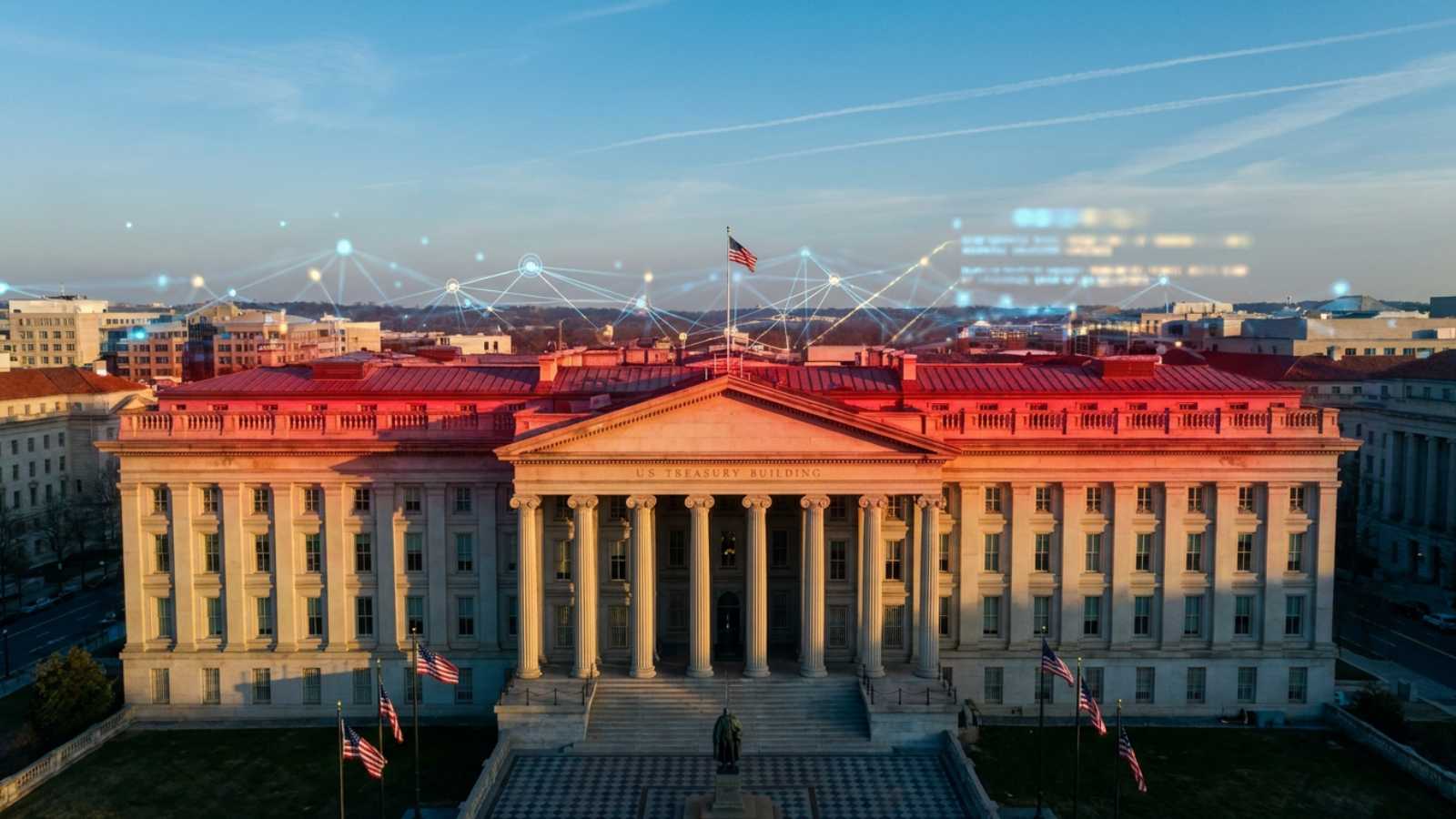
June 3, 2026. Scott Bessent makes a statement rarely heard from officials at his level. The US Treasury Secretary affirmed that the Treasury Department is moving with "all deliberate speed" to execute President Trump's executive order: the establishment of an official Strategic Bitcoin Reserve and digital asset stockpile owned by the federal government.
That phrase is not empty diplomacy. In American legal tradition, "all deliberate speed" is terminology with strong precedent, first used in the Brown v. Board of Education ruling. Its meaning: as fast as procedurally possible, without skipping steps. Bessent chose those words deliberately. This is not a signal to markets. This is instruction to the state apparatus that the machinery is already running.
This is not a warning, not a threat. The world's largest budget treasury department is building a position in an asset that cannot be reprinted, cannot be frozen by foreign jurisdictions, and whose supply never responds to any monetary policy.
For the global digital asset community, Bessent's statement is confirmation of a long-debated point: can Bitcoin become a modern sovereign reserve asset? Washington, on June 3, 2026, provided its answer. And the answer comes not in rhetoric, but in bureaucratic procedure that is already underway.
Policy Anatomy: 2 Components That Must Be Distinguished
Trump's executive order encompasses 2 different things often conflated in popular discussion.
First, the Strategic Bitcoin Reserve. This is designed as the state's long-term Bitcoin holding, with philosophy parallel to the Strategic Petroleum Reserve (SPR) for oil or gold reserves at Fort Knox. This asset is not to be sold during budget deficits or when the government needs short-term operational funding. It is a geopolitical buffer held over a long horizon.
Second, the digital asset stockpile. This component is broader and includes other crypto assets already held by the federal government, mostly from seizures in criminal and civil cases over years. Unlike the Bitcoin reserve with its permanent hold-only nature, the stockpile can be managed more actively according to policy considerations.
This 2-layer distinction reflects mature thinking. Bitcoin is treated specially as a permanent strategic reserve. Other assets fall into inventory category with more flexible management. The implication is clear: the US government does not view all crypto assets as equivalent, and Bitcoin receives a fundamentally different classification from other digital assets.
The most logical first step is inventory. The US has become one of the world's largest Bitcoin holders not through open market purchases, but through law enforcement channels over years. The Silk Road case and various other major seizures have accumulated assets that have been awaiting disposition. This new policy changes their status from "assets awaiting liquidation" to "permanent state reserve".
From Bretton Woods to the Nixon Shock to Bitcoin: History Repeating Differently
Debate over what qualifies as a global reserve asset is not new. Every few decades, the world's monetary order undergoes major reset.
1944, Bretton Woods: The US dollar became the global reserve currency with a gold anchor at $35 per troy ounce. Other countries held dollars because they believed dollars could be exchanged for gold anytime. The US gained exorbitant privilege: printing dollars to finance spending, and the entire world had to accept them as valid payment.
August 15, 1971, the Nixon Shock: President Nixon announced the suspension of dollar-to-gold convertibility. The Bretton Woods system collapsed overnight. The dollar survived as reserve currency not because it was backed by gold, but because there was no better alternative and because the petrodollar agreement with Saudi Arabia locked global oil trade in dollars.
The lesson left from that moment: global reserve assets do not depend on intrinsic value alone. They depend on collective trust, network effect, and the absence of better alternatives.
January 3, 2009, Genesis Block: Satoshi Nakamoto released Bitcoin. In the first block, he embedded the headline: "Chancellor on brink of second bailout for banks." Criticism of the fiat monetary system was encoded directly into the blockchain foundation that has run uninterrupted for 17+ years since.
This timeline is not coincidental. Each point is a response to limitations of the previous system. Bretton Woods collapsed because the US could not keep printing dollars while maintaining gold parity. The fiat system survived on petrodollar strength, not intrinsic value. Bitcoin emerged because the 2008 crisis proved that a system deemed too big to fail could be rescued with massive money printing at the cost of long-term trust.
Comparison of Characteristics of the World's Major Reserve Assets
| Characteristic | Gold | US Treasury Bonds | Bitcoin |
|---|---|---|---|
| Supply limit | Finite but continuously mined | Unlimited, government-issued | Hard cap absolute 21 million units |
| Counterparty risk | None, direct physical asset | Yes, Fed policy and sovereign risk | None, decentralized consensus |
| Portability | Very low, heavy physical mass | High but requires intermediary | Very high, borderless and self-custody |
| Auditability | Limited, periodic physical audit | Dependent on Treasury policy | Full transparency on-chain, real-time |
| Confiscation risk | Has occurred, 1933 Executive Order 6102 | Can be frozen via global sanctions | Very low with self-custody |
| Production control | No single entity | Federal Reserve and Congress | Algorithm permanently embedded in protocol |
The table above explains why the Bitcoin-as-reserve argument is not mere speculation. Compared to the 2 main alternatives, Bitcoin has a combination of properties neither possesses: cryptographically verified supply, no counterparty risk, and digital portability unlimited by jurisdictional borders.
Geopolitics of Digital Reserves: Context That Makes This Policy More Than Domestic Affair
Washington's decision does not stand alone. It moves amid several long-running geopolitical pressures that are intensifying.
El Salvador as International Legal Precedent
Since 2021, El Salvador has proven that recognition of Bitcoin as a sovereign monetary asset can work under international law. 5 years of this experiment, despite controversy, has provided template and legitimacy that this option is available to sovereign nations without waiting for multilateral consensus from the IMF or World Bank.
Gulf Cooperation Council and Post-Oil Diversification
Some countries in the Persian Gulf region are actively exploring reserve diversification from petrowealth to new asset classes. Bitcoin, as an asset with limited supply not tied to any nation's policy, enters the same radar as gold as a long-term store of value instrument, especially for nations wanting to reduce exposure to fiat currency fluctuations.
De-Dollarization Pressure in the BRICS Bloc
Russia, China, India, Brazil, and new BRICS members continue seeking dollar alternatives for bilateral trade. Bitcoin, controlled by no nation, paradoxically appeals to those wanting to escape dollar dominance. Simultaneously, it appeals to the US itself, because holding a large Bitcoin position means having a seat at the table as the asset becomes more globally significant, regardless of which direction the monetary order moves.
This paradox is crucial to understand: Bitcoin is equally desired by those wanting to weaken dollar hegemony and by the US wanting to preserve it. This is not contradiction, but characteristic of an asset truly neutral geopolitically, unable to be claimed as loyal to anyone.
Real Challenges That Cannot Be Ignored
Every new policy has implementation friction. There are 4 main challenges the US Treasury Department will face in this process.
Volatility vs. Conventional Reserve Function
Traditional foreign exchange reserves are designed to be stable, liquid, and usable for market intervention within days. Bitcoin still shows volatility far exceeding gold or government bonds. Is a reserve asset whose price can move significantly over weeks suitable for sovereign balance sheet management? The answer depends on how this component is positioned within the overall reserve portfolio. If not for short-term liquidity intervention but as a long-term geopolitical hedge, volatility becomes a parameter with different relevance.
Nation-State Level Cybersecurity
Storing digital assets at sovereign scale opens new attack surfaces never faced by the Treasury Department before. Cold storage for national reserves is not immune to nation-state level attacks. Security protocols must be equivalent to first-class military infrastructure, and building that capability requires time, budget, and non-trivial expertise.
Sovereign Ownership Concentration
If the US, followed by other major nations, begins accumulating Bitcoin at large scale, sovereign ownership concentration could create market dynamics never before studied. With a protocol-limited supply, massive acquisition by a few large nations could create ownership oligopoly at odds with Bitcoin's own decentralization spirit. The tension between "Bitcoin as neutral asset" and "Bitcoin controlled by a few major sovereigns" is a question that will become increasingly relevant.
Internal and Multilateral Political Resistance
Within the US, there are factions from both parties viewing this policy as speculation with taxpayer money. At the multilateral level, the IMF and some major central banks hold ambivalent positions toward digital assets not controllable by any monetary authority. Navigating this politics is no less complex than its technical implementation. "All deliberate speed" is not just about custody logistics, but about maintaining political consensus so the legislature does not reverse this policy midway.
Systemic Implications: Far Beyond Mere Price
If the US successfully formalizes the Strategic Bitcoin Reserve, its domino effects go beyond crypto markets in several concrete ways.
First, Bitcoin's legitimacy as an institutional asset will surge not because its price rises, but because the world's largest GDP nation officially classifies it as a sovereign reserve asset. This opens the path for other central banks, sovereign wealth funds, and multilateral financial institutions to consider similar allocations without taking the political risk of being "first". When market leaders move, others simply follow precedent.
Second, the "digital gold" narrative gets confirmation from the most unexpected actor: the US Treasury, guardian of the world's most conservative financial order. If they can hold Bitcoin as a sovereign reserve, the argument that Bitcoin is a speculative instrument without legitimacy becomes increasingly hard for regulators in other jurisdictions to maintain. This will accelerate regulatory liberalization in Europe, Japan, Korea, and major markets still hesitant.
Third, and perhaps most transformative, is the shift in industry standards. This policy forces the entire digital asset ecosystem to move from the phase "we have great potential" to "we must be ready to be national infrastructure". Custody standards, audit protocols accountable to legislatures, regulatory reporting frameworks, and security procedures previously optional now become absolute prerequisites. Companies unable to meet those standards will be irrelevant in the next adoption cycle.
Finally, there is the dimension of global coordination. When the US builds a Bitcoin reserve, other nations must choose position: join in building reserves, refuse and face risk of being left behind in the new asset architecture, or create their own digital alternatives via CBDC. Whatever choice is made, the 21st-century global monetary order will not be the same as what was designed at Bretton Woods in 1944.
Bessent chose the word "deliberate" for a reason. Behind that procedural caution lies a final strategic decision: the United States has decided Bitcoin sits on the nation's balance sheet. The question now is no longer whether, but how fast, how much, and in what global architecture Bitcoin will play its role as this century's reserve asset.
Share Article
Share
Disclaimer
All content presented in this article is for informational purposes only and should not be considered as financial advice. The author and publisher are not licensed financial advisors. Any investment decisions made by readers are personal choices, and all risks are solely borne by the reader. We strongly recommend conducting independent research and consulting with a licensed financial advisor before making any financial decisions.