Iran's Attack on Israel Drives Oil Price Spike: Ceasefire Risk and Global Energy Market Stability Analysis
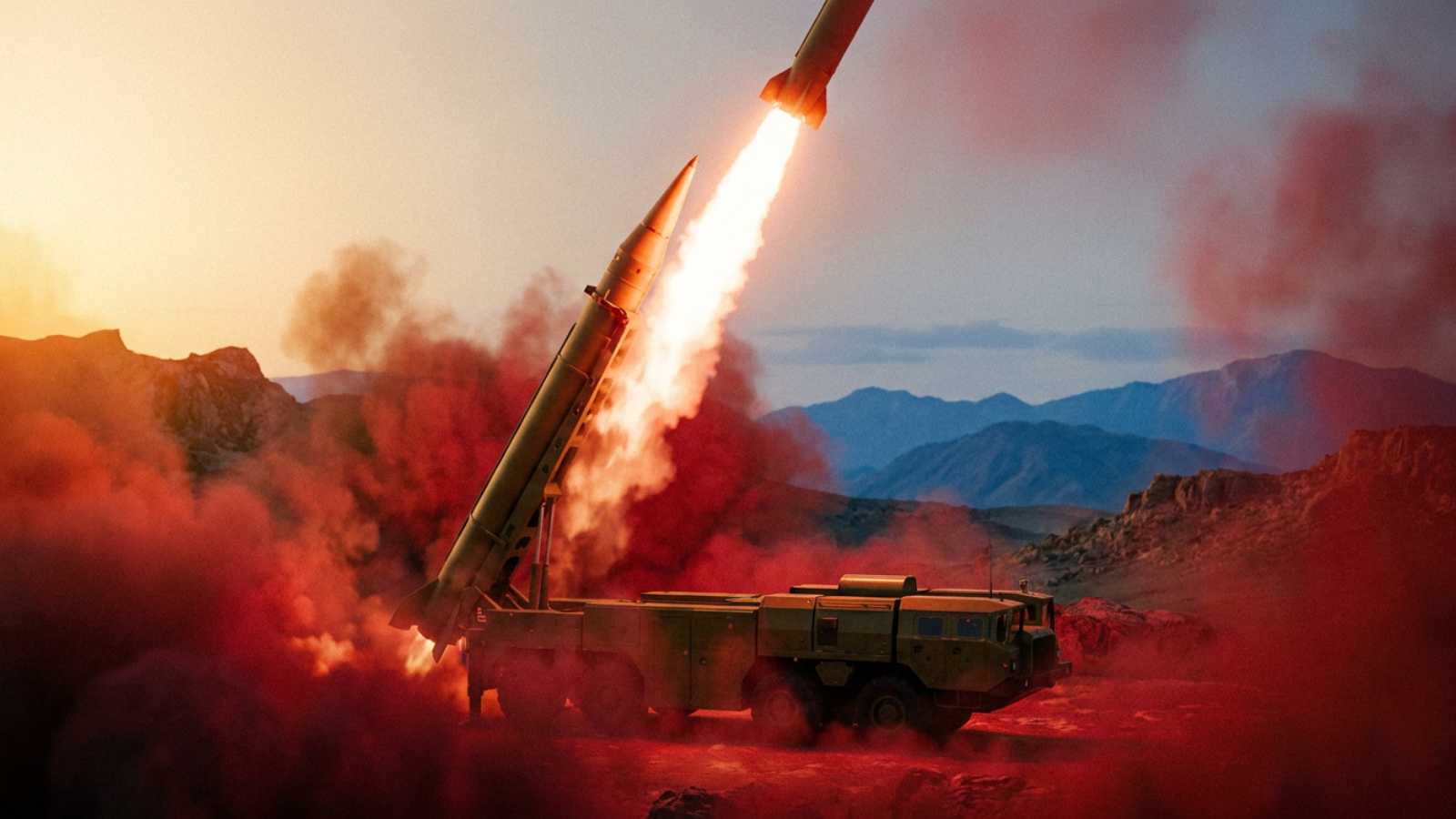

Crude Oil and Missiles: The Anatomy of the Market Shock on June 7
Iran's missile attack on Israel on June 7, 2026 immediately triggered a sharp spike in crude oil prices across global markets. Within hours of the first reports, Brent crude and WTI futures contracts surged significantly during Asian and European trading sessions, reflecting rapid repricing of geopolitical risk premiums by traders in London, New York, and Singapore. The market waited for no diplomatic confirmation. When missiles fell in a region controlling roughly 30 percent of global oil production, the first reaction was always the same: buy buttons on energy contracts hit simultaneously.
What complicated the situation was not the attack itself, but the context in which it occurred. The ongoing ceasefire negotiations, with active regional mediators, immediately faced an existential threat. The market not only anticipated supply disruption today but also began repricing the probability of total collapse in the de-escalation framework that had kept prices from rising further.
Iran's Position and the Strait of Hormuz in the Global Energy Map
Iran consistently ranks among the 4 countries with the largest proven crude reserves in the world, according to historical data from both the BP Statistical Review and the EIA. Iran's production capacity, even under strict economic sanctions, remains a variable that cannot be ignored by any supply-demand equilibrium model.
More critical still is Iran's geographic position, which embraces the northern edge of the Strait of Hormuz. This chokepoint is no mere narrow waterway: roughly 20 percent of all global oil trade passes through this strait daily. That volume includes exports from Saudi Arabia, Kuwait, Iraq, the UAE, and Qatar. Any disruption to the Strait of Hormuz, even if temporary, would create acute supply deficits at refineries in South Korea, Japan, India, China, and several major European importing nations dependent on Persian Gulf supplies.
History shows that energy markets react sharply to conflicts involving Iran or threats to Hormuz, often before any actual physical disruption occurs. Risk premiums operate on probability, not certainty.
| Geopolitical Crisis | Year | Impact on Crude Oil Prices | Duration of Pressure |
|---|---|---|---|
| Arab Oil Embargo (Yom Kippur War) | 1973 | Rose roughly 4x over 6 months | Years |
| Iranian Revolution and Hostage Crisis | 1978-1980 | Rose more than 2x from baseline | 2-3 years |
| Iraq's Invasion of Kuwait | 1990 | Nearly 2x at peak crisis | 6-9 months |
| Drone Attack on Abqaiq, Saudi Arabia | 2019 | Spike roughly +15% in 1 day, quick correction | 2 weeks |
| Russia's Invasion of Ukraine | 2022 | Brent reached roughly $130/bbl at peak | 6-12 months toward partial normalization |
| Iran's Attack on Israel, June 2026 | 2026 | Sharp spike; specific magnitude at time of writing | To be determined |
This historical pattern affirms one consistent principle: the initial impact is always dramatic, but the duration and depth of price correction depend on how far military escalation continues and how quickly diplomatic channels produce real de-escalation.
Ceasefire on a Knife's Edge: The Diplomatic Dimension That Amplifies Risk
The timing of this attack is a factor that significantly worsened market sentiment. Ceasefire negotiations involving mediators such as Qatar and Egypt, 2 countries that have functioned as indirect communication channels between warring parties, were at a critical phase. One significant military attack could freeze all diplomatic momentum in hours.
The oil market does not wait for diplomatic resolution. It calculates the probability distribution across all plausible scenarios, then raises risk premiums even before any certainty about what will actually happen. Prices spike not only because of actual supply disruption, but because the possibility of much larger disruption becomes increasingly credible.
If the ceasefire collapses entirely, the scenario most feared by energy analysts is escalation into a military phase targeting regional energy infrastructure. The most relevant precedent is the drone attack on Saudi Aramco's Abqaiq oil processing facility in September 2019. That attack, in 1 day, erased roughly 5 percent of global crude supply and triggered one of the largest one-day price spikes in decades, though production recovery ultimately came faster than the market had expected.
Multi-Asset Response: Impact Beyond Spot Oil Prices
The crude oil price surge does not stand alone. The global asset ecosystem is tightly interconnected, and a shock at one point rapidly spreads to other asset clusters within hours of the first news.
Shares of major oil producers rallied in line with spot price gains, from ExxonMobil and Chevron in the US to Shell and TotalEnergies in Europe. On the flip side, airline shares came under immediate pressure, as jet fuel costs represent one of the largest operational cost components for airlines. Delta Air Lines, United Airlines, Lufthansa, and Asian carriers such as Singapore Airlines came under analyst sell ratings as margin compression from higher fuel costs was factored in.
The shipping and logistics sector faced dual pressure: bunker fuel costs rose while maritime insurance premiums for Persian Gulf routes spiked. Lloyd's of London, which designates maritime war zones for risky routes, moved fastest. Once an area is designated or expanded as a war zone, insurance premiums can jump multifold, effectively raising the entire regional logistics cost.
Gold as a safe haven rallied alongside oil, reflecting inflows into protective-value assets amid suddenly intensified geopolitical uncertainty. The US dollar strengthened as investors sought liquidity and safety. Yields on short-term US Treasury bonds fell as demand increased, while long-term yields moved mixed between higher inflation expectations versus dominant flight-to-safety.
OPEC+ and Production Response Complexity
OPEC+'s reaction to this episode is not a simple variable. Under normal conditions, the cartel has mechanisms to dampen extreme volatility: Saudi Arabia, the UAE, and Kuwait hold spare capacity that can be activated relatively quickly to add supply to the market and push prices lower.
But conditions now are not normal. Saudi Arabia is in a diplomatically complicated position. Relations between Riyadh and Tehran had thawed through Chinese mediation in 2023, but the Iran-Israel conflict brings a far more complex regional constellation. Aggressively raising production to stabilize prices could be read as a gesture indirectly benefiting Western importing nations, a maneuver with its own political implications inside OPEC+.
Iraq adds another layer of complexity. Baghdad has deep economic ties with Tehran, including in the energy sector, while also being an OPEC producer with significant capacity. Any signal from Iraq about production response will be interpreted through the lens of that unique Iran-Iraq relationship.
Russia, a de facto OPEC+ member, also has its own interests. High oil prices benefit Moscow's fiscal balance, already strained by Western sanctions. There is no strong incentive from Russia to push prices lower, especially in a geopolitical situation that broadly favors the bargaining power of major energy-producing nations.
Three Scenarios for Energy Investors
From the perspective of investors and risk analysts, the situation as of June 8, 2026 maps into 3 main scenario paths with different implications for prices and portfolio strategy:
Scenario A: Rapid De-escalation. Mediators successfully restore the ceasefire framework within 1 to 2 weeks. The June 7 attack is categorized as an isolated incident, not a change in Iran's strategy. The geopolitical risk premium already priced in begins correcting. Oil moves lower toward pre-attack levels, though not fully because residual uncertainty remains. This is the base case the market expects.
Scenario B: Prolonged Controlled Escalation. The ceasefire does not collapse entirely but also does not recover. Both sides continue military action at limited intensity, maintaining diplomatic communication channels but without real resolution. Risk premiums persist at elevated levels for 3 to 6 months. Oil prices move sideways in a high range, with episodic volatility each time new escalation reports emerge. This is the scenario most exhausting for the market because uncertainty drags on without clear catalysts in either direction.
Scenario C: Full Escalation and Hormuz Risk. The conflict escalates into a real threat to the Strait of Hormuz or large-scale attacks on regional energy infrastructure. This is a tail risk the market prices in but not the main scenario. If it occurs, the impact far exceeds typical oil price spikes: acute supply crisis that could trigger recession in major energy-importing nations and force emergency coordination of global Strategic Petroleum Reserve (SPR).
Portfolio Strategy Under Geopolitical Energy Uncertainty
For equity investors exposed to the energy sector, crude oil spikes do indeed lift valuations of large hydrocarbon producers in the short term. ExxonMobil, Chevron, BP, Shell, and TotalEnergies are the names most directly benefiting when spot prices spike sharply. But medium-term valuations still depend on whether these high prices reflect fundamental change or merely risk premium that will correct once tensions ease.
The most straightforward hedging strategies in these conditions include the following approaches:
- Long oil futures contracts or energy ETFs for direct exposure to price increases
- Long volatility via options (straddle or strangle) to profit from energy volatility spikes without needing to call direction precisely
- Increased exposure to gold and short-term US Treasuries as safe-haven hedges
- Underweight or hedging on airline shares, energy-intensive manufacturing, and consumer discretionary most vulnerable to margin compression
- Monitor Lloyd's maritime insurance premiums for the Persian Gulf as a leading indicator of physical escalation risk priced by the market
Institutional investors with longer horizons need to separate 2 questions often muddled together: "how high is oil today" versus "does this conflict structurally change global energy production and distribution fundamentals over the next 24 to 36 months." Based on historical patterns of past Middle East conflicts, the answer to the second question is almost always no, unless escalation reaches a point that truly destroys production capacity or permanently closes main distribution routes.
Long-Term Energy Policy Under Geopolitical Pressure
Beyond short-term price dynamics, this episode again surfaces a structural question long on the table of global energy policymakers: how much dependence on an inherently unstable region can be sustained?
Strategic reserves from the US and other IEA members are available as emergency tactical buffers. SPR release coordination like the IEA executed in 2022 in response to Russia's invasion of Ukraine can dampen price spikes in the short term. But the SPR is a tactical instrument, not a structural solution.
The case for accelerating energy transition gains fresh narrative ammunition from every crisis like this. Solar and wind have no Strait of Hormuz, no geopolitical chokepoint for sunshine or wind. But technical and economic reality cannot be ignored in the short term: over the next 12 to 24 months, there is no massive substitution that can replace crude oil in transportation, petrochemicals, and heavy industry.
LNG is also affected in this episode. Qatar, one of the world's largest LNG exporters, sits geographically within the Persian Gulf risk radius. Europe, which pivoted heavily to LNG after the 2022 energy crisis, now faces scenarios where LNG supplies from the Middle East could be disrupted if escalation continues. The United States, the world's largest LNG exporter, sits in the most advantaged position from this dynamic, since US LNG exports do not pass through Hormuz at all.
Long-term investment decisions in the energy sector can no longer be designed apart from the geopolitical map. Every new infrastructure project, every long-term supply contract, and every energy source diversification strategy must weigh the probability of Middle East conflict scenarios as a core input variable, not a risk footnote on the back page of an annual report.
Share Article
Share
Disclaimer
All content presented in this article is for informational purposes only and should not be considered as financial advice. The author and publisher are not licensed financial advisors. Any investment decisions made by readers are personal choices, and all risks are solely borne by the reader. We strongly recommend conducting independent research and consulting with a licensed financial advisor before making any financial decisions.