Iran's Missile Strikes on Kuwait and Bahrain: Military Escalation and Threat to Global Energy Stability
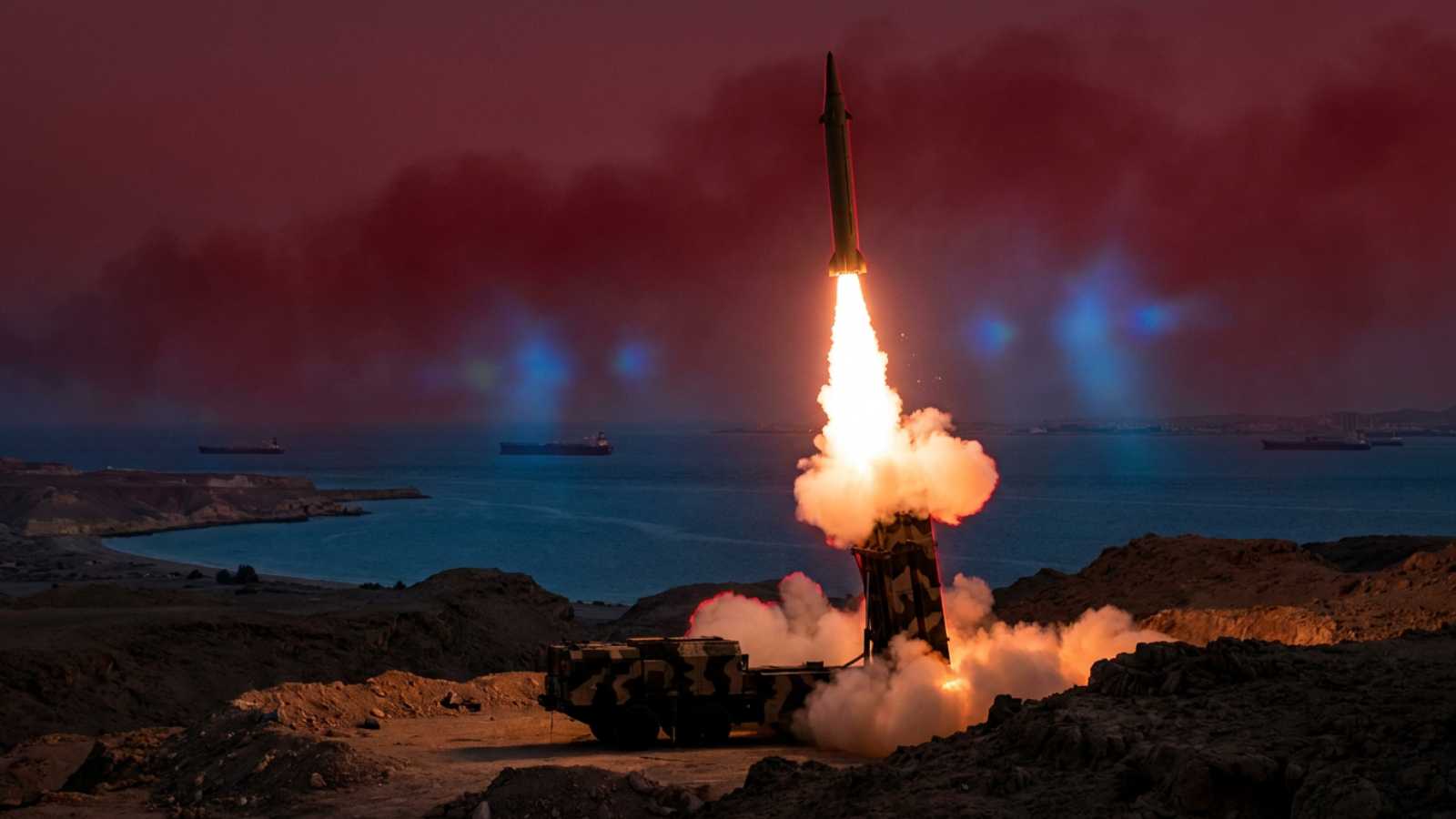

Iran's Missiles Aimed at Kuwait and Bahrain: One Night That Shifted Hormuz Calculations
Saturday, June 6, 2026. The sky above the Arabian Gulf was not dark as usual. Iran fired missiles toward Kuwait and Bahrain, two Gulf nations that are America's most consolidated military partners in the region. Simultaneously, the US claimed it had shot down Iranian drones and struck Iranian strategic radar installations. Within hours, a conflict that had been running quietly through proxies and diplomatic pressure became open confrontation between two powers with direct interests in Earth's most vital energy corridor.
Not just two small Gulf nations felt the impact. This strike hit directly at the strategic logic underpinning the architecture of global energy supply. Bahrain is the permanent headquarters of the US Navy's Fifth Fleet. Kuwait is one of OPEC's largest oil exporters. When both became targets, oil markets, financial markets, and foreign ministry offices across the world woke earlier than usual on Sunday morning.
Anatomy of Escalation: What Happened on June 6
The confirmed timeline based on available reports: Iran fired missiles toward Kuwait and Bahrain. The US responded, or perhaps initiated a separate escalation, by shooting down Iranian drones and striking strategic radar installations. Both actions occurred within a short time window, not over days, but hours.
What made this incident different from previous skirmishes was the target set. Kuwait is not just any ordinary Gulf state. Kuwait is:
- An active GCC member with bilateral defense agreements with the US
- An oil exporter whose production flows into global distribution systems through seaports in the Arabian Gulf
- Host to US military assets that have operated there since the 1991 Gulf War
Bahrain is even more symbolic. Naval Support Activity Bahrain is the official operational base of US Naval Forces Central Command (NAVCENT) and the Fifth Fleet. Striking Bahrain literally means targeting US Navy facilities from close range. This is not a subtle display of strength. This is a statement of position.
The Strait of Hormuz: A Chokepoint That Cannot Be Ignored
To understand why the world is holding its breath, look at a map. The Strait of Hormuz is a narrow passage between Iran to the north and Oman and the United Arab Emirates to the south. At its narrowest point, it is only about 33 kilometers wide. Through this strait flows oil from Saudi Arabia, Kuwait, Iraq, the UAE, Qatar, and part of Iran itself to global markets.
Approximately 20 percent of global oil supply transits the Strait of Hormuz. This figure is not a rough estimate; it is a calculation consistently cited by the US Energy Information Administration (EIA) and various international energy agencies for years. In a single day, the volume passing through equals the combined oil needs of all of Western Europe.
Iran has repeatedly threatened to close the Strait of Hormuz in contexts of maximum pressure. That threat was largely treated as a diplomatic bargaining chip. But yesterday's missile strike shifted the shade of that perception. When Iran actually fires missiles at neighbors directly bordering that strait, markets have every right to ask: how far is Tehran willing to go?
Implications for Global Energy Markets
A single strike cannot directly close the Strait of Hormuz. But uncertainty itself is enough to move oil markets. This is a mechanism proven repeatedly in the history of Gulf conflicts.
In 2019, when drones struck Aramco facilities at Abqaiq and Khurais, crude oil prices spiked sharply in a single trading session before eventually settling as certainty emerged about production recovery. That incident involved one facility in one country. What happened on June 6, 2026 involved active missile launches at 2 GCC member nations simultaneously, with the US directly engaged militarily on the other side.
Oil prices at the time this article was written cannot be cited because no specific figures from verified sources are available yet. But the market logic is clear: supply uncertainty from a region that supplies one-fifth of global oil demand is a scenario always met with a risk premium.
Major oil-importing nations with high Gulf dependence face real pressure:
| Importing Nation | Gulf Oil Dependence | Direct Risk |
|---|---|---|
| Japan | High (majority of imports from GCC) | LNG and crude supply at risk |
| South Korea | High (significant from Kuwait, Saudi Arabia) | Manufacturing supply chain disruption |
| India | Medium-high (Iran is one supplier) | Dual impact: oil imports plus diaspora remittances from Gulf |
| China | Medium-high (diversified but GCC dominant) | Industrial input costs rise |
| European Union | Medium (diversified to US LNG, Norway) | Dependent on seasonal context and gas stocks |
Disrupted Negotiations: Diplomacy in the Shadow of Missiles
What makes this situation more complex is the diplomatic context underway. Based on available reports, the June 6 incident occurred amid ongoing negotiations between the US and Iran. Whatever its form and stage, that process now faces an existential test.
This pattern has happened before. Iran's nuclear negotiations with the P5+1 at various phases between 2013 and 2015 were always disrupted by military incidents or hardline statements from Tehran's conservative side. What differs now is a higher level of physical escalation, not just rhetoric.
"When missiles are already in the air, trust at the negotiating table collapses far faster than any diplomat can rebuild it in weeks."
This is not a quote from any particular official; it is basic logic of international negotiation that applies universally.
For Tehran, this strike may be framed as a proportional response to US actions of shooting down drones and striking radar. But for Washington and the GCC, the sequence of events does not change the fact that Iranian missiles landed near allied territory.
Positions of Key Actors
Russia's position in this context warrants attention. As a major oil exporter whose economy is highly dependent on high energy prices, a Gulf conflict that drives up oil prices paradoxically benefits Moscow fiscally, even though Russia rhetorically always supports de-escalation.
China, by contrast, occupies a far more complex position. Beijing is the world's largest oil importer, and has also invested considerable diplomatic capital in bridging the Saudi-Iran relationship since the March 2023 agreement. The escalation now underway is a direct setback for China's positioning as a regional power broker in the Middle East.
Bahrain and Kuwait: Two Different Stakes
Iran treats Bahrain and Kuwait as targets in different contexts, and this matters to understand.
Bahrain, with a Shia majority population but Sunni Al Khalifa monarchy rule, has long been a friction point in Iran's regional narrative. Tehran historically has interests in Bahrain's domestic politics, and the presence of the Fifth Fleet there is always a sore point in Tehran's rhetoric. A strike toward Bahrain carries layered symbolic weight.
Kuwait is different. Kuwait is a Gulf state that has traditionally pursued a more cautious and moderate foreign policy than Saudi Arabia. Kuwait's relationship with Iran is not as heated as Riyadh-Tehran relations. If Kuwait enters as a target of Iranian missiles, it signals that Tehran's calculations have shifted to a more regionally aggressive posture, not merely targeting direct ideological adversaries.
Real Risks: The Hormuz Scenario
There is no confirmation that the Strait of Hormuz has been closed. But the maritime insurance sector has already begun recalculating risk profiles for vessels transiting that area. This is a mechanism that has occurred several times before.
During the Tanker War in the Iran-Iraq War of the 1980s, insurance premiums for ships in the Gulf spiked dramatically. In 2019, several tanker attack incidents in the Oman Gulf led Lloyd's of London and the London maritime insurance market to revise rates for that zone.
VLCC (Very Large Crude Carrier) ships carrying oil from Kuwait, the UAE, and Saudi Arabia must transit Hormuz. There is no alternative route of equivalent operational scale. Saudi Arabia's Petroline to the Red Sea exists, but its capacity is far below the normal volume passing through Hormuz. The UAE has the Abu Dhabi Crude Oil Pipeline (ADCOP) to Fujairah in the Arabian Sea, but again, insufficient to handle normal volume.
If Hormuz faces significant disruption, whether from active conflict, mines, or de facto blockade, East Asia will feel it first. Japan and South Korea, which depend on Gulf energy imports in substantial percentages, lack sufficient strategic reserves to cover the gap for more than a few months.
Nuclear Dynamics That Cannot Be Separated
It is impossible to discuss Iran's escalation without incorporating the nuclear dimension. Iran's uranium enrichment program has reached levels that many proliferation analysts classify as "threshold state", meaning the technical capability to produce nuclear weapons exists, even if the political decision to do so has not been taken.
Every significant military escalation theoretically affects this calculation in two directions:
- Military pressure from the US and allies could push Iran to accelerate its nuclear program as an ultimate deterrent.
- Disrupted nuclear negotiations eliminate existing mechanisms to moderate that program.
This is a classic security dilemma now operating in a context already hot militarily.
Challenges to GCC Security Architecture
The Gulf Cooperation Council (GCC) is theoretically a bloc with collective defense posture. But in practice, when Kuwait and Bahrain are directly attacked, questions about collective response become very real.
Saudi Arabia, the GCC's strongest power, now stands at a crossroads of interests. Riyadh in recent years has pursued gradual normalization with Tehran, partly mediated by Beijing. This escalation complicates that calculation. Saudi cannot appear passive when GCC members are struck, but also does not want to become part of an escalation that damages Riyadh's own economic interests, especially in context of major projects like NEOM and Vision 2030 that require regional stability.
The UAE faces similar considerations. Dubai and Abu Dhabi have positioned themselves as global financial and logistics hubs. Open conflict in the region is a direct threat to that positioning.
| GCC Member | Position on Iran | Direct Interest |
|---|---|---|
| Saudi Arabia | Cautious normalization since 2023 | Oil exports, Vision 2030 stability |
| UAE | Trade relations with Iran, but US alignment | Global financial hub, goods transit |
| Kuwait | Traditional moderation | Oil exports, direct territorial security |
| Bahrain | Historical tensions with Tehran | Domestic security, US Fifth Fleet presence |
| Qatar | Diplomatic communication with Iran | LNG transit, Hamas relations |
| Oman | Traditional mediator | Historic US-Iran backchannel |
Diplomatic Channels That Remain
Oman has historically served as a backchannel for US-Iran communication. During the nuclear negotiations of the Obama era, Oman played a key role in back-channel talks. Under current conditions, Muscat becomes one of the few actors that could still serve as a bridge.
Qatar has its own communication lines to various non-state actors connected to Iran. But Qatar's diplomatic capacity is limited in the context of direct military conflict between major powers.
The UN, through the Security Council, will likely call an emergency meeting. But with the US directly militarily engaged and with Russia and China holding different interest calculations, the Security Council's capacity to produce effective resolutions is severely constrained.
What is most needed now is unilateral de-escalation from one side, or mediation by an actor trusted by both. No clear candidate exists for that role on the June 2026 geopolitical map.
Spillover Risk: What Could Go Wrong in an Unplanned Confrontation
The history of Gulf conflicts is full of unplanned incidents with potential to trigger further escalation. In 1988, the destroyer USS Vincennes shot down Iran Air Flight 655, mistaken for a military aircraft, killing 290 civilian passengers. That incident was unintended, but left diplomatic wounds for years.
In the current situation, with the US actively shooting down Iranian drones and striking radar, and Iran firing missiles toward Kuwait and Bahrain, the space for miscalculation becomes extremely narrow. One misidentified incident, one field commander making a different call than instructed, or one weapons system failing to perform as planned, could shift what is currently still within a "limited confrontation" corridor into something far more difficult to control.
When two powers with active military assets operate within a narrow radius in the Gulf, the probability of miscalculation increases non-linearly. The history of Gulf conflicts shows the most dangerous incidents are often not planned ones, but those arising from field misidentification.
Intelligence communities in Washington, Tel Aviv, Riyadh, and Beijing are all working with high intensity on one question: is Iran truly willing to push this further, or was yesterday the peak of escalation before returning to the negotiating table?
The answer to that question will determine global oil prices in the coming weeks, the stability of global financial markets, and the prospects for millions of lives in a region that has lived too long under the shadow of conflict.
Share Article
Share
Disclaimer
All content presented in this article is for informational purposes only and should not be considered as financial advice. The author and publisher are not licensed financial advisors. Any investment decisions made by readers are personal choices, and all risks are solely borne by the reader. We strongly recommend conducting independent research and consulting with a licensed financial advisor before making any financial decisions.