Israel-Iran Ceasefire at the Brink of Crisis: Hezbollah Rejects Lebanon Accord, Iran Sets New Conditions
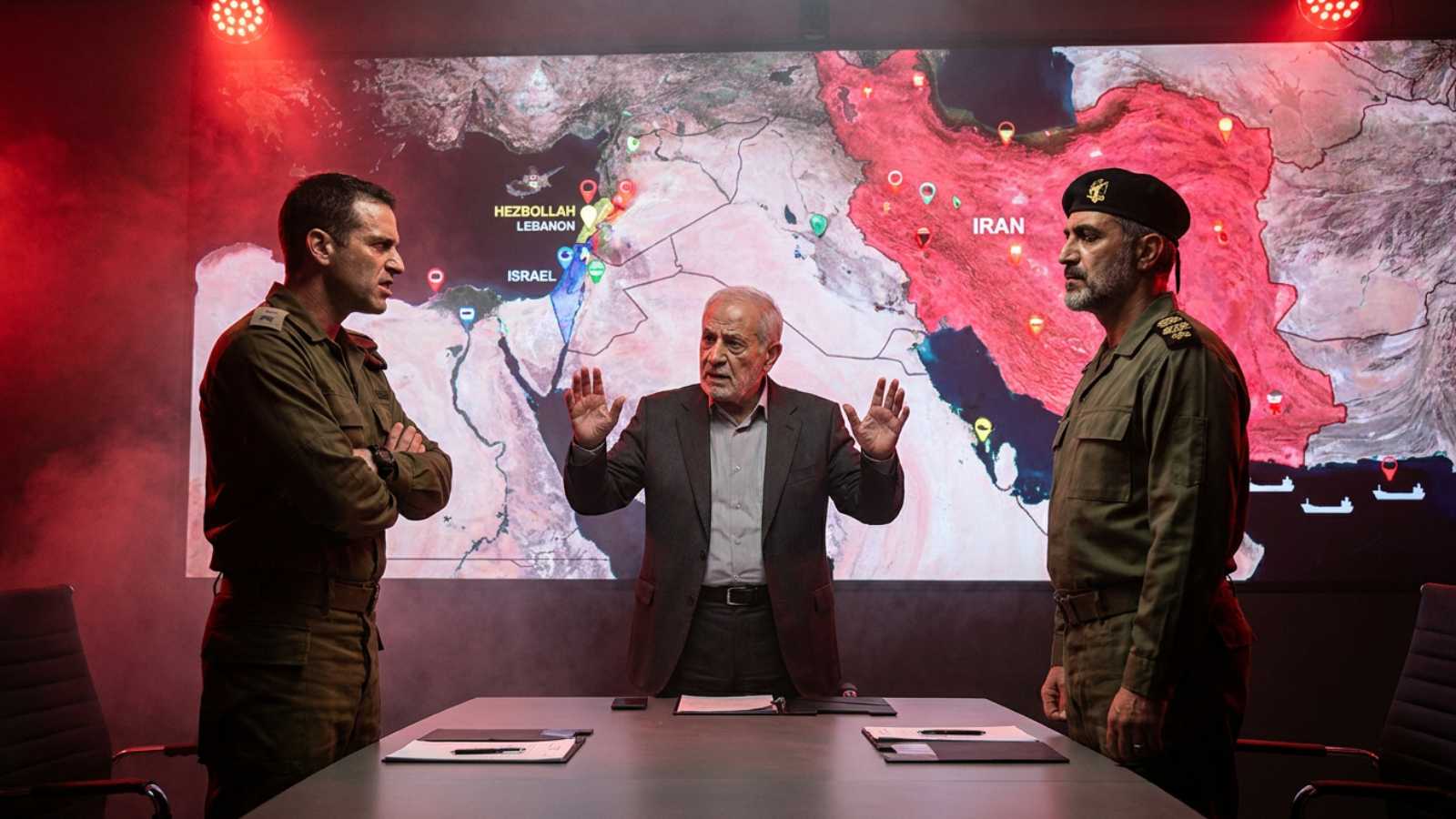

A Ceasefire Fractured: June Crisis and the Chain of Rejections in the Middle East
In April 2026, the world witnessed something rare: Israel and Iran agreed to halt open hostilities. The ceasefire, brokered with full diplomatic involvement from Washington, was then extended indefinitely by President Donald Trump, a move that was read as a diplomatic victory for his administration.
Six weeks later, the peace structure began to crack from the most unexpected direction.
Hezbollah, the Lebanese armed group that has long operated as Iran's principal proxy in the region, flatly rejected the agreement between Israel and Lebanon that was being negotiated. This rejection is not merely a political statement; it is a binding strategic veto, because Iran subsequently conditioned the continuation of the Israel-Iran ceasefire on the resolution of the Lebanon accord first. Pull one thread, and the entire web threatens to unravel.
By June 9, 2026, the UN had already raised serious concerns about Israeli evacuation orders in southern Lebanon that directly impacted the civilian population. The situation is no longer about 2 disputing nations. It has become a multi-layered crisis: diplomatic, humanitarian, and strategic all at once.
Ceasefire Architecture and Why Lebanon Became Its Weakest Point
The Israel-Iran ceasefire in April 2026 was built on the assumption that bilateral tension between Tel Aviv and Tehran could be managed separately from the broader proxy war dynamics. That assumption now proves overly optimistic.
Iran never operates as a single actor. Its projection of power in the region runs through a network of armed groups scattered from Yemen to Iraq, from Syria to Lebanon. Hezbollah is the strongest of them all, both militarily and politically. When Tehran signed the ceasefire with Israel, Hezbollah did not sign anything.
This is not merely a procedural issue. Hezbollah is an entity with its own interests that, though deeply tied to Iran, still operates based on Lebanon's specific political calculations. They reject the Israel-Lebanon accord not solely due to Tehran's instructions, but because the accord is seen as threatening their position in Lebanon's domestic political landscape.
Iran, in turn, uses Hezbollah's rejection as a bargaining tool. If Lebanon is not settled according to Tehran's interests, the ceasefire with Israel will not be guaranteed. This is how Iran maintains influence without directly violating the agreement already signed.
Hezbollah's Position: Not Merely Symbolic Rejection
Hezbollah's rejection of the Israel-Lebanon accord needs to be read in a context far deeper than generic anti-Israel sentiment.
Hezbollah enters every Lebanon negotiation with one basic question: does this agreement strengthen or weaken our position within Lebanon? The accord being negotiated between Israel and Lebanon includes clauses relating to the presence of weapons in southern Lebanon and recognition of certain territorial boundaries. For Hezbollah, any agreement that touches on their armaments or the legitimacy of their presence in southern Lebanon is something that cannot be accepted without very specific provisions on their side.
This position is not new. Hezbollah has long rejected any arrangement that would delegitimize its military role, even when Lebanon's own government might be willing to negotiate. This time, the difference is that the rejection happens at a critical moment, amid a still-fragile ceasefire between Israel and Iran.
The United Nations expressed serious concern over Israeli evacuation orders in southern Lebanon that impact the civilian population, calling on all parties to fully respect their international humanitarian law obligations.
The humanitarian impact of Israeli evacuation orders in southern Lebanon cannot be separated from this context. For the UN, large-scale civilian displacement is a signal that the security situation on the ground remains highly unstable, regardless of what is agreed at the diplomatic table.
3 Actors, 3 Different Calculations
Mapping this crisis requires a detailed picture of what each side actually wants and why those interests are so difficult to reconcile.
Israel
Israel wants the ceasefire with Iran to last, because open conflict with Tehran is too costly militarily and economically. But Israel cannot accept a Lebanon accord that grants legitimacy or greater freedom of movement to Hezbollah in southern Lebanon. For Tel Aviv, the ideal solution is a ceasefire with Iran separate from Hezbollah dynamics. Something that proves far more difficult to execute than anticipated.
Iran
Iran plays with more dimensions. Officially, Tehran wants the ceasefire to last because open conflict with Israel and potential US intervention pose existential risks. But Iran also does not want Lebanon settled in a way that weakens Hezbollah, because that would mean weakening Iran's influence in the region. The conditions Tehran sets on the ceasefire reflect its desire to remain relevant at the Lebanon negotiating table, not just the Iran-Israel one.
Hezbollah
Hezbollah is the most complex actor because it operates at 2 levels simultaneously: as an armed militia with specific security agenda, and as a political party participating in Lebanon's government. Their rejection of the Israel-Lebanon accord is a domestic political decision with direct regional consequences. They do not care whether the Israel-Iran ceasefire survives; what they care about is whether their position in southern Lebanon remains untouched.
Map of Key Actors' Interests in the Crisis
| Actor | Iran-Israel Ceasefire Position | Lebanon Accord Position | Core Interest |
|---|---|---|---|
| Israel | Supports, wants continuation | Wants boundary recognition and Hezbollah constraints | Northern border security and Iran deterrence |
| Iran | Conditional, hinge on Lebanon | Wants Lebanon resolved per Tehran interests | Maintain regional proxy network |
| Hezbollah | Not directly involved | Firmly rejects | Military position in southern Lebanon remains intact |
| US / Trump | Mediator, pushes extension | Facilitate negotiations between parties | Diplomatic credit and regional stability |
| UN | Humanitarian as top priority | Push civilian protection | International humanitarian law |
| Lebanon (government) | Neutral-cooperative | Divided, depends on domestic forces | Stability and reconstruction access |
| Saudi Arabia / GCC | Observer with direct stakes | Limited but present influence | Energy market stability and regional security |
Trump's Diplomacy: Between Momentum and Structural Limits
Trump celebrates the extension of the Israel-Iran ceasefire as his personal diplomatic achievement. This pattern is consistent with his administrative style: claiming quick credit for newly unfolding developments, then facing the reality that the real work is just beginning.
The Israel-Iran ceasefire is real and significant. But it is built on an unfinished foundation. Resolving Lebanon's status, arranging terms for Hezbollah, and securing guarantees acceptable to all parties is homework that was never truly completed before Trump declared his success.
Washington faces a structural dilemma in this crisis. On one hand, the US is the primary mediator and chief security guarantor for Israel. On the other, US influence over Hezbollah is severely limited because Washington itself designated Hezbollah as a terrorist organization, meaning there is no direct diplomatic channel. Influence over Hezbollah must run through Tehran, and Tehran is using it as leverage against Washington.
This is what makes the US position harder than it appears on the surface. Trump can speak directly with Netanyahu. Trump can speak with Iranian representatives. But Trump cannot speak directly with Hassan Nasrallah or Hezbollah's leadership. And without that dialogue, managing Hezbollah's rejection becomes work that must be done indirectly, through Tehran, with all the uncertainty inherent to that process.
Energy Implications and Global Market Stability
The Middle East is not merely an abstract geopolitical crisis. This region is the backbone of global energy supply. Instability here directly impacts the world oil market, shipping lanes in the Persian Gulf and Red Sea, and long-term investment calculations in the global energy sector.
The April 2026 ceasefire offered temporary relative stability reflected in energy market sentiment. When Tehran and Tel Aviv stopped openly threatening each other, the geopolitical risk premium usually priced into oil fell. Now, with the ceasefire again uncertain, that risk premium is back.
The Strait of Hormuz remains the primary focus of global energy analysts. About 20 percent of global oil trade passes through that strait. If tensions rise to the point where Iran considers using the Strait of Hormuz as leverage, the impact on energy markets will be felt immediately. This is not a new threat; Iran has deployed this rhetoric many times in the past decade. But every time the threat emerges in a context of real, active tension, markets respond consistently.
Beyond that, instability in Lebanon indirectly impacts energy projections in the eastern Mediterranean. Lebanon has potential offshore gas reserves but has not exploited them significantly due to political instability and maritime boundary disputes only partially resolved through agreements in prior years.
Humanitarian Crisis: The Often-Overlooked Dimension
Behind the diplomatic negotiations happening in Geneva and Washington corridors, there is a much harsher reality on the ground. The UN raised concerns over Israeli evacuation orders in southern Lebanon this week, and this is not a routine procedure that can be dismissed.
Evacuation orders that displace large civilian populations always carry real consequences: families separated, healthcare access disrupted, local economies damaged, and collective trauma that will not simply resolve when security improves.
What complicates this further is that Hezbollah operates within the civilian population of southern Lebanon. They are not just a militia; they are a social network, healthcare provider, and economic actor in many southern Lebanese communities. Any military operation there, or even just pressure for evacuation, cannot be separated from its wide humanitarian impact.
The UN faces a classic dilemma in situations like this: calling for civilian protection without inadvertently shielding armed actors operating within that population. This balance is never easy, and there is no formula that works perfectly in every context.
Why Lebanon Negotiations Are Structurally So Difficult
Lebanon itself is a country experiencing multiple crises since the end of the prior decade: severe economic crisis, wounds not fully healed from the Beirut 2020 disaster, and a politically fragmented sectarian system. Lebanon's government does not have 1 single, strong voice. This is not a temporary weakness; it is a system design that has long prevailed.
Hezbollah is both part of Lebanon's government and an actor opposing that government's rules when they conflict with its interests. Negotiating with Lebanon means negotiating with an entity that cannot fully guarantee implementation of signed agreements, because Hezbollah may not comply.
This is a structural problem that cannot be solved with short-term diplomatic pressure alone. Israel knows this. The US knows this. And Hezbollah fully leverages that knowledge as a source of its bargaining power.
Any Israel-Lebanon accord that hopes to endure must find a formula that makes Hezbollah either unable or unwilling to block it, whether through accommodating their significant interests or through arrangements that render Hezbollah's rejection practically irrelevant. As of June 9, 2026, no single approach has succeeded at this.
Escalation Risks: 3 Scenarios to Watch
The current situation does not mean the ceasefire has formally ended. But a number of escalation scenarios warrant consideration by policymakers, analysts, and markets.
Scenario 1: Iran Withdraws Its Conditions and Allows the Ceasefire to Continue
If Lebanon negotiations achieve sufficient progress, even if imperfect, Iran could choose not to enforce its conditions rigidly. Tehran knows that open conflict with Israel while facing sanctions pressure and domestic pressure is not an ideal choice. There is incentive to keep the ceasefire alive while maintaining leverage through conditional rhetoric.
Scenario 2: Hezbollah Acts Independently on the Ground
If the situation in southern Lebanon deteriorates rapidly due to large-scale evacuations and mounting Israeli pressure, Hezbollah could decide to take military action without full coordination with Tehran. This is the scenario most difficult to control by all parties, including Iran itself.
Scenario 3: Ceasefire Collapses and Iran-Israel Escalation Returns
Worst case: Iran formally withdraws from the ceasefire and escalation begins again. This would draw the US into a more active situation, trigger responses from Israel's allies in the West, and potentially involve other regional actors in uncontrollable dynamics.
None of these 3 scenarios is certain to occur. But all are possible. And that possibility alone is enough to influence energy markets, force governments to recalculate their positions, and drive diplomats to work far harder in the days ahead.
The Role of Regional and Multilateral Actors Often Overlooked
Saudi Arabia and other Gulf states watch these developments with very direct interests. Riyadh is in a lengthy and complex process of normalization with various parties in the region. Lebanon-Israel-Iran instability directly impacts those calculations.
Egypt and Jordan, which historically have been regional buffers between Israel and the Arab world, have stakes here. Lebanon destabilization could send waves of refugees and security pressure beyond the Levantine region's boundaries.
The European Union, which has interests in Mediterranean stability and strong economic relations with both Israel and Arab countries, is active through diplomatic channels. Yet European influence in phases of crisis like this is always limited compared to Washington because the EU has no direct security instruments it can rapidly deploy.
Russia and China have more complex relationships. Moscow has military presence in Syria and strategic interests in Iran. Beijing has broad economic interests in the region, including from long-term cooperation agreements with Iran. Neither has clear interest in seeing open escalation, but both are also not positioned or willing to actively mediate according to Washington's agenda.
What makes this crisis different from prior episodes of tension is that this time there is a formal, already-running ceasefire. Its failure is not merely a return to the prior status quo; it is an active setback that will affect confidence in every regional diplomatic effort going forward. Washington's reputation as an effective mediator is also at stake.
Share Article
Share
Disclaimer
All content presented in this article is for informational purposes only and should not be considered as financial advice. The author and publisher are not licensed financial advisors. Any investment decisions made by readers are personal choices, and all risks are solely borne by the reader. We strongly recommend conducting independent research and consulting with a licensed financial advisor before making any financial decisions.