Meta Invests $200 Billion in Louisiana: AI Infrastructure Strategy and Global Hyperscaler Competition
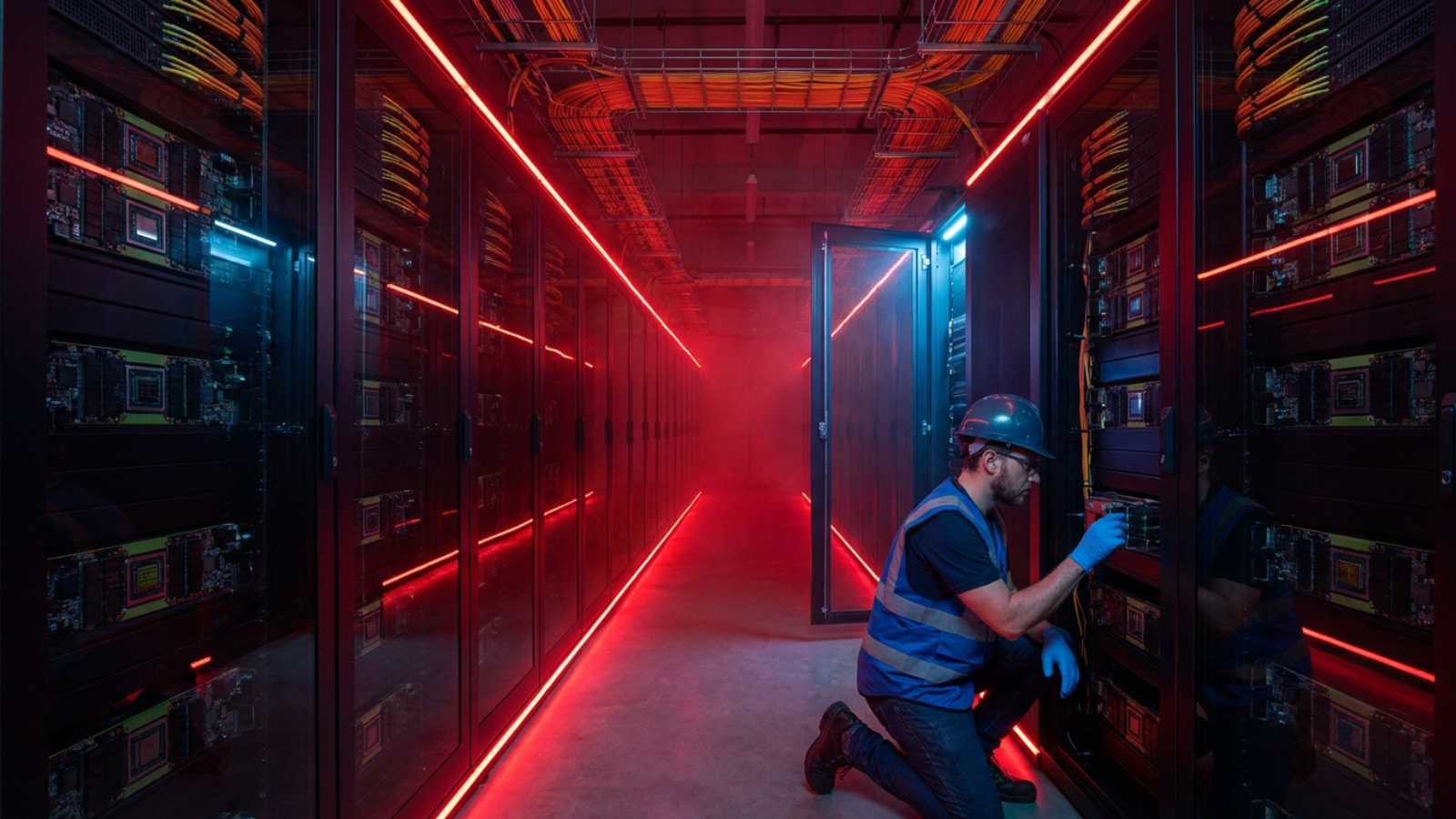

When $200 Billion Is Driven Into Louisiana
The number needs little explanation to shift the conversation. Meta announced a $200 billion investment to build a massive data center in Louisiana, a move that immediately captured Bloomberg's attention and positioned itself as one of the largest single infrastructure commitments in the history of the global technology industry.
Louisiana isn't a location that typically appears in tech headlines. There's no Silicon Valley there, no mature startup ecosystem, no organic concentration of AI engineers. But that's precisely not what Meta is looking for. Hyperscale data centers have very different requirements than tech offices: cheap land in hundreds of hectares, access to expandable electrical capacity on a massive scale, proximity to transmission infrastructure, and an investment climate that allows accelerated permitting. Louisiana provides all of this in a combination hard to find in denser, more expensive states.
But the $200 billion figure isn't just about location choice. It's a strategic statement that transcends geography. Meta is building a foundation of computing power that physically cannot be replicated in the short term by anyone, including Amazon, which is explicitly named as a direct competitor in this race.
From Software to Brick: Infrastructure as Competitive Moat
A paradigm shift is underway. For two decades, competitive advantage was built on software: better algorithms, more intuitive UI, more accurate machine learning. Hardware and infrastructure were treated as commodities that could be rented from cloud providers. The efficient business model was one that didn't need to own its own datacenter.
The generative AI era fundamentally changed that calculus.
Training a single frontier-scale language model requires thousands of GPU chips working in coordination for months. Inference, the process of running a trained model to serve user requests in real time, requires equally massive capacity and must be available without interruption around the clock. The operational costs of large-scale AI models, if using third-party cloud infrastructure, can become a burden that permanently erodes margins.
Meta has a specific problem here. The company launched Meta AI as an assistant embedded in WhatsApp, Instagram, Messenger, and Facebook, platforms that collectively serve billions of users. Every query to Meta AI is an inference request that requires computation. At the scale of billions of active users, renting capacity from Amazon Web Services or Google Cloud isn't just expensive: it creates permanent strategic dependence on direct competitors.
Owning infrastructure means Meta controls cost per query, controls service latency, controls deployable capacity according to need, and doesn't give margin to others for work that is the core of its own product. $200 billion is the price of exiting that dependence.
The Llama model that Meta launched as an open-source series also requires continuously running training infrastructure for next-generation model iteration. Each new version requires more training compute than the previous generation, a pattern that cannot be economically outsourced at scale over the long term.
A recurring logic emerges in discussions among cloud infrastructure analysts, summed up well:
Companies that control the compute layer will ultimately control who can compete in the AI economy, at what cost, and at what scale.
The Competitive Map: Amazon and the Hyperscaler Ecosystem
The Louisiana announcement comes amid competition already running hot across the industry. Amazon, with its AWS infrastructure spread across dozens of global regions, is the direct competitor cited in this context. But the competitive landscape is broader than bilateral.
| Company | AI Compute Strategy | Infrastructure Monetization Model | Position in the Race |
|---|---|---|---|
| Meta | Self-owned, Louisiana + other global campuses | Internal (feeds, ads, Meta AI) + potential commercialization | Direct competitor to AWS for AI compute dominance |
| Amazon (AWS) | Cloud infrastructure as a service, Trainium chips | Revenue from rental to all sectors | Cloud leader facing disintermediation risk |
| Microsoft | Azure + OpenAI partnership, custom silicon | Enterprise SaaS + cloud AI APIs | Strong enterprise position, dependent on key partners |
| Google/Alphabet | Proprietary TPU + Gemini, GCP | GCP cloud + integrated ad revenue | Full vertical but facing antitrust pressure |
| xAI | Memphis Colossus cluster, NVIDIA GPU | Grok on X platform | Scale still far below established hyperscalers |
Every hyperscaler is competing for the same resources in limited quantities: latest-generation GPU chips from NVIDIA's Blackwell line and custom silicon (TPU, Trainium, MTIA), electrical capacity in locations that already have adequate transmission infrastructure, land with access to water for industrial-scale cooling, and data center engineering expertise whose supply cannot be expanded as fast as demand.
This competition is not zero-sum in the short term. Current AI compute demand is growing faster than capacity that can be collectively built by all players. But within a 5 to 7-year horizon, when infrastructure currently under construction begins operating at full capacity, whoever has the lowest per-unit cost capacity will dominate the most fundamental layer of the AI ecosystem's economy.
Louisiana, Energy, and Pressure on the Electrical Grid
There is no hyperscale data center without industrial-scale energy consumption. Modern AI compute facilities draw power equivalent to a mid-sized city continuously, 24 hours a day, 365 days a year. At the scale of a $200 billion investment, its electrical requirements are proportionally massive, and Louisiana must prepare infrastructure accordingly.
This forces concrete questions for southern American grid operators: where does the power come from, who pays for the transmission infrastructure expansion needed to absorb this new load, and on what timeline can new capacity operate at full.
The industry trend clearly points toward long-term Power Purchase Agreements (PPA) with renewable and nuclear energy sources. Microsoft, in a move widely analyzed as industry precedent, signed an agreement to restart the Three Mile Island nuclear plant in Pennsylvania as a dedicated power source for its AI needs. Google and Amazon are both actively securing solar, wind, and nuclear PPAs to meet sustainability commitments while locking in long-term energy prices.
Meta in Louisiana will likely pursue a similar path. At the scale of $200 billion, its energy needs require a supply solution that is equally large-scale and long-term, not just a connection to existing grid capacity.
For investors in the utilities and infrastructure construction sectors, this is a significant signal often missed in conventional "AI stocks" narratives. Meta's Louisiana data center will require large-scale EPC (Engineering, Procurement, Construction) contractors, high-voltage transformer and switchgear suppliers, precision cooling systems with industrial-scale capacity, and underground cable networks in volumes proportional to total investment. This spending flows to subsectors that don't always appear in AI stock screeners but have direct, tangible exposure to this infrastructure boom.
Structural Risks That Cannot Be Ignored
The $200 billion commitment is not without commensurate risks. Some are technical, some regulatory, some systemic.
Technology Risk: Rapidly Moving Obsolescence
AI chip architecture is evolving at unusual speed. The chip generation that is standard today could be replaced by fundamentally different architecture in 3 to 5 years. An AI model requiring thousands of GPUs for training could run on far fewer hardware resources if efficiency techniques like model distillation, quantization, or mixture-of-experts paradigms continue to advance rapidly.
Physical infrastructure built to current hardware specifications must be modular and adaptable enough to absorb these changes. Designing that flexibility into a facility under construction is its own engineering and financial challenge.
Regulatory Risk: Multi-Layered Oversight
An infrastructure project this large in the United States cannot avoid scrutiny from multiple regulatory layers. Environmental impact from large-scale water and energy consumption must get federal and state approval. Connection to the electrical grid requires coordination with FERC and regional operators. If Meta's dominant position in AI develops to a certain point, the Federal Trade Commission or Department of Justice will begin paying closer attention.
Demand Risk: Cycles That Are Never Straight
Current AI compute demand appears limitless. But technology history is full of boom-bust cycles that trap large capacity investments in sudden surplus. If generative AI adoption slows, if more efficient models require far less compute per query, or if the paradigm shifts to on-device AI that reduces reliance on centralized cloud, the physical capacity already built cannot be reallocated easily.
Geopolitical Risk: Fragile Chip Supply Chain
Chips needed to build and operate Louisiana-scale AI data centers are mostly manufactured by TSMC in Taiwan, with lithography equipment from ASML in the Netherlands. Geopolitical friction between the United States and China, which has already created various chip export restrictions, is a real risk variable for long-term infrastructure planning. Disruption to the semiconductor supply chain could slow deployment and raise costs significantly.
This list of risks is not an argument against investing. It's an argument that $200 billion should be accompanied by decision-making architecture far more complex than simply choosing a location.
When Physical Infrastructure Determines Everything Again
For two decades, the dominant narrative in the technology industry was that software eats the world. Hardware is a commodity. The cloud is the answer. Physical infrastructure is a burden that should be outsourced to specialists.
Meta investing $200 billion in concrete and cable in Louisiana is proof that narrative has been permanently revised. In the AI race, controlling the compute layer physically is the only way to guarantee access, cost, and capacity that cannot be influenced by competitors' strategic decisions.
Competition with Amazon isn't just about who has the better AI model or product users prefer more. It's about who is literally the host where the world's AI runs. Amazon with AWS today occupies that position for most of the global startup and enterprise ecosystem. Meta with Louisiana is building the argument that not all big players will want to remain tenants in infrastructure owned by competitors.
The implications for investors and market observers operate on multiple layers simultaneously:
-
Chip supply chain: The $200 billion commitment means Meta is a massive buyer of GPUs and custom chips for years to come. This reinforces NVIDIA's position in the short term, but also gives Meta leverage to push vendors toward pricing and roadmaps more favorable to Meta in large-scale negotiations.
-
Real estate and construction: A project of this scale absorbs the capacity of data center contractors, structural steel suppliers, industrial cooling systems, and underground cable networks. This is real tailwind for the technology infrastructure construction subsector, and the value is not insignificant.
-
Utilities and energy: Louisiana and regional utilities around it will face new demand that forces acceleration of investment in generation and transmission capacity, and potentially new nuclear energy contracts. This is a catalog of opportunities different from the AI stocks usually discussed.
-
Industry capex dynamics: When Meta announces this number, competitors cannot stay silent. Amazon, Google, and Microsoft face their own pressure from shareholders and competitive positioning to ensure they don't fall behind in this capacity race. Meta's $200 billion announcement has the potential to trigger the next round of announcements from rivals.
This big bet will take years before its results can be evaluated clearly. Infrastructure starting construction today won't operate at full capacity for several years. But one thing is certain since the Louisiana announcement: physical infrastructure has returned as a determinant of competitive advantage in an industry that spent two decades claiming this world is software-defined. Turns out it's not entirely true.
Share Article
Share
Disclaimer
All content presented in this article is for informational purposes only and should not be considered as financial advice. The author and publisher are not licensed financial advisors. Any investment decisions made by readers are personal choices, and all risks are solely borne by the reader. We strongly recommend conducting independent research and consulting with a licensed financial advisor before making any financial decisions.