New World Screwworm Detected in Texas: First Threat in 60 Years to Global Beef Supply Chain

One Calf in Texas, One Confirmation That Changed Everything
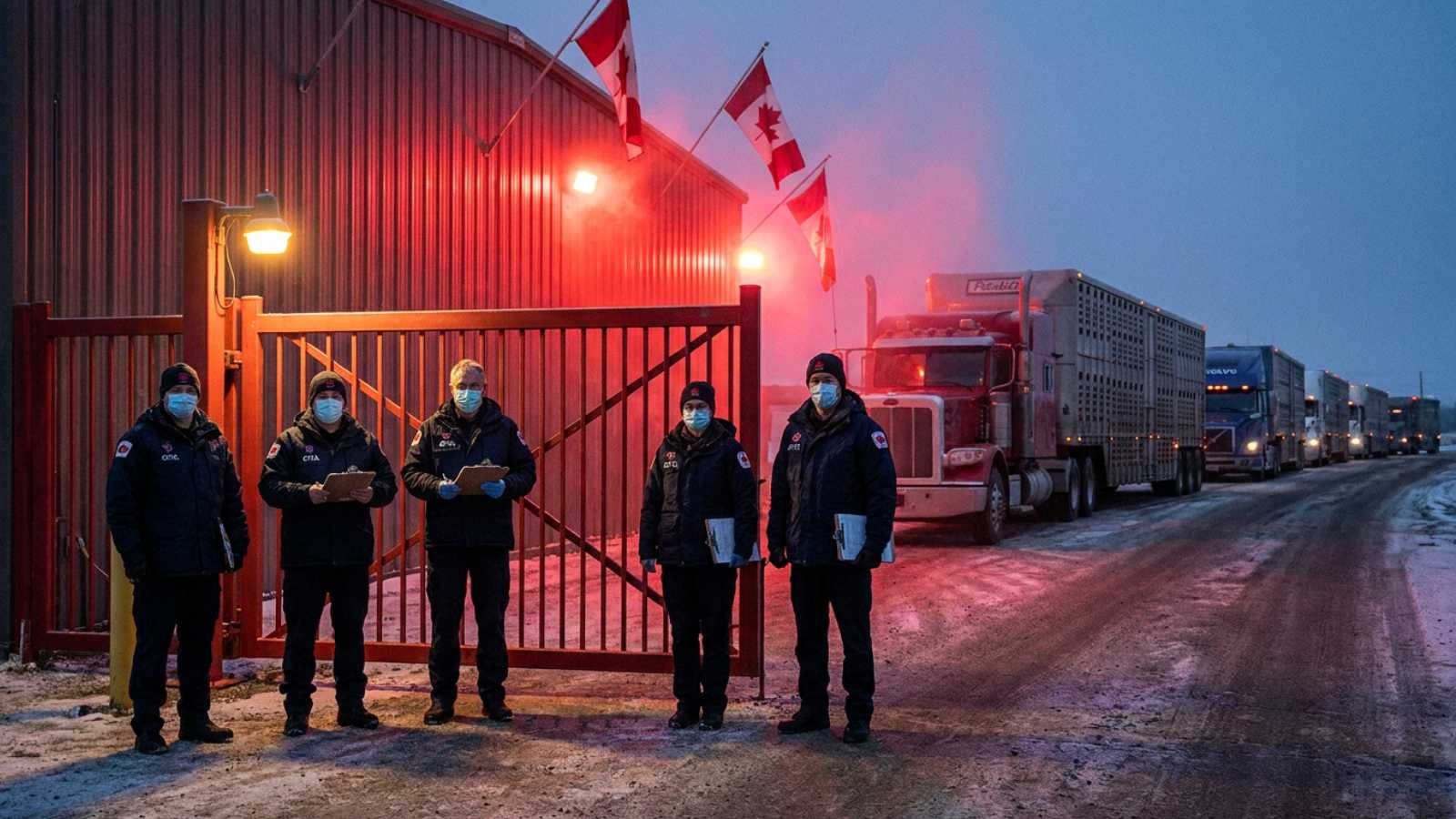
One calf in Texas. One lab report. Three days later, Canada closed its border to Texas livestock.
That was the sequence of events between June 3 and 6, 2026, after the USDA confirmed the presence of Cochliomyia hominivorax, better known as New World Screwworm, on United States soil for the first time in more than 60 years. Not merely an exotic parasite brought by an airline passenger. This is an active infestation on domestic livestock, from a fly once declared eradicated from all of North and Central America through one of the most ambitious eradication programs in modern agricultural history.
The potential direct loss figures circulating among analysts: $1.8 billion for Texas alone, not counting cascading impacts to the global beef supply chain.
What Is New World Screwworm and Why It Is So Feared
Cochliomyia hominivorax, literally meaning "man-eater" in Latin, though its primary victims are warm-blooded animals: cattle, goats, sheep, horses, pigs, deer, and in rare cases humans. What sets it apart from most other parasitic flies is one biological detail that admits no compromise: its larvae do not consume dead tissue. They require living flesh.
The infection cycle begins when an adult female fly lays eggs along the edge of an open wound or natural opening, such as the navel of a newborn animal, ears, or genital areas. A single female can lay 200 to 400 eggs in one session. Within 11 to 21 hours, the eggs hatch. The emerging larvae immediately burrow into living tissue, rotating like a screw as they penetrate deeper, which gives the parasite its name: screwworm.
What makes this infestation escalating: the larvae release chemical secretions that attract more female flies to lay eggs in the same wound. The result is layered infestation. An untreated adult cow can die within 7 to 14 days from tissue destruction and secondary infection. On vast grazing pastures with thousands of animals, early detection can be the difference between manageable losses and herd devastation.
60 Years Free: A Scientific Victory Almost Forgotten
Before 1966, New World Screwworm was a seasonal threat accepted as part of the risk of ranching in the southern United States. Texas, Florida, and the Sunbelt states bore the heaviest burden each summer. Livestock losses reached tens of millions of dollars per year.
The solution came from USDA entomologist Edward F. Knipling, who along with colleagues developed the Sterile Insect Technique (SIT). The premise: if male flies are sterilized through irradiation and released in numbers far exceeding the wild male population, female flies that mate with sterile males produce eggs that cannot hatch. With sufficiently large and consistent releases over enough generations, the wild population collapses from within.
Implementation was industrial-scale work. Facilities for breeding sterile flies were built and scaled to produce hundreds of millions of sterile male flies every week. Not hundreds of thousands. Hundreds of millions, every week, for years. Small aircraft dropped capsules containing sterile flies across target regions.
By the mid-1960s, the United States successfully eliminated C. hominivorax from its mainland. The program then extended southward, passing through Mexico, Guatemala, El Salvador, Honduras, Nicaragua, and Costa Rica, until reaching the narrowest point of Central America: the Darién region separating Panama from Colombia. Along this corridor, a permanent biological barrier has been maintained to this day. Every week, sterile flies are released along this zone to prevent wild populations from Central America from crossing northward.
For 60 years, that barrier held. Until the calf in Texas was discovered.
Crisis Timeline: 3 Days from Lab to International Ban
| Date | Event | Status |
|---|---|---|
| June 3, 2026 | USDA confirms C. hominivorax on a calf in Texas | Confirmed |
| June 3-4, 2026 | USDA APHIS activates emergency response protocol; field teams deployed | Confirmed |
| June 5, 2026 | International media begins coverage; first signals from commodity markets | Confirmed |
| June 6, 2026 | Canada officially bans livestock imports from Texas | Confirmed |
The specific location of the infected ranch was not publicly released by the USDA. What was confirmed: this is an active infestation, not incidental contamination from imported goods or a traveler. This means that at the time the case was detected, the flies were already in active reproductive cycles on the Texas ranch.
The USDA Animal and Plant Health Inspection Service (APHIS) immediately activated protocols that had actually been prepared as a "standby contingency" for years. Field investigation teams were deployed to South Texas. Ranchers across the region were alerted to intensively inspect livestock, particularly newborn calves and animals with open wounds.
The largest unanswered question as of June 6, 2026: how did C. hominivorax breach the biological barrier in Panama and reach Texas? The most frequently cited hypothesis among experts is live animal movement through trade routes crossing Mexico, given that the USDA temporarily suspended live cattle imports from Mexico in 2024 following screwworm discoveries in northern border regions, before eventually resuming imports with tightened surveillance protocols.
Canada Closes the Door: First Signal of Domino Effect
Canada's import ban effective June 6, 2026 is the first documented bilateral trade response. For the US cattle industry, Canada is not a peripheral market: US live animals and beef routinely flow north in large volumes. Calves are frequently imported for fattening at Canadian feedlots before slaughter, a trading pattern established over decades.
Ottawa's decision is not excessive. Canada has a livestock population that has never faced C. hominivorax in modern history, meaning no established immunity, no trained large-scale detection protocols, and no standing control program. Screwworm entering Canada could create a crisis more difficult to manage than in the US, which at least retains institutional memory from the old eradication program.
More significantly: Canada's ban signals to other international markets that health certification for US beef from Texas is now in question. Japan, South Korea, and the Gulf states, which collectively import billions of dollars in US beef annually, have their own risk assessment protocols that could be triggered by Canada's precedent.
Global Supply Chain: Who Is Exposed
Texas is not merely a state with many cattle. Texas is the gravitational center of American cattle industry: largest livestock population of any state, dense feedlot networks, and direct access to export routes through Gulf Coast ports. Disruption in Texas is not regional disruption. It is disruption at a critical node of the global animal protein supply chain.
| Destination Market | Vulnerable Products | Historical Regulatory Sensitivity |
|---|---|---|
| Canada | Live livestock + fresh meat | Very high, already blocked June 6, 2026 |
| Japan | Premium grade beef, fresh-frozen | Very high, strict sanitary standards |
| South Korea | Premium frozen beef | High |
| European Union | Beef (limited volume but strategic) | High, based on residue and animal health |
| GCC Region | Frozen halal beef | Moderate to high |
| Mexico | Live livestock, two-way trade | Complex, Mexico itself potentially a source |
The table above reflects the risk map based on each market's historical regulatory patterns, not conditions confirmed across all these nations as of June 6, 2026. Only one is definitively in effect: Canada's ban.
Premium US beef prices, particularly USDA Choice and Prime cuts, were already at elevated levels before this outbreak. The new uncertainty from an outbreak not yet fully mapped is enough to push international buyers to evaluate alternative sources: Australia, Brazil, Argentina, each with substantial export capacity but different price and volume profiles. Even temporary demand shifts can create price dislocations felt by end consumers across dozens of nations.
Sterile Insect Technique: A Weapon That Exists, But Takes Time
The historic SIT program that eradicated screwworm cannot be activated in 48 hours. Sterile fly breeding facilities require time to scale up. Aerial distribution must be organized. And sterile flies must be released in quantities massively exceeding wild populations, consistently, across areas large enough to break the reproduction cycle.
Female C. hominivorax have natural flight ranges of 40 to 50 kilometers from their emergence site, and under certain wind conditions can travel farther. This means from the moment larvae first became adult flies in Texas, before the case was detected, distribution could have already covered significant territory. The most critical question for the USDA team now: how widely has the population already spread before the alarm sounded?
"Screwworm is a harsh reminder that victory in agriculture is never permanent. The biological barrier in Panama had to be maintained every week, without cease, for 60 years. One gap was all it took to reverse everything."
The 2026 context differs from the 1960s era in several advantageous ways: insect breeding technology is more advanced, air logistics capacity is vastly larger, field diagnostic tools are faster, and the scientific understanding of C. hominivorax behavior is far deeper. But the scale of the potential problem could also be different. In the 1960s, ranching infrastructure was still more concentrated and easier to monitor. Today, large-scale ranching networks are widely dispersed, and wildlife populations, which cannot be routinely inspected, are far larger.
A Dimension Often Overlooked: Wildlife as Reservoir
Discussion of New World Screwworm almost always centers on economic livestock. What rarely gets discussed, but is equally serious: the threat to wildlife. White-tailed deer, coyotes, feral pigs, large raptors like eagles, all are vulnerable to C. hominivorax infestation.
In Texas and neighboring states, large, widely distributed white-tailed deer populations could become a natural reservoir that is extremely difficult to control. Wildlife cannot be routinely inspected like livestock. They move freely across ranch boundaries, state lines, even international borders. If C. hominivorax penetrates the wild population, the eradication operation map becomes far more complex and requires approaches different from those used in the 1960s.
This is also what makes the urgency of the eradication window so high.
New World Screwworm is easiest to control before its population spreads to wildlife and remote ranches. Every week of delay in responding with full SIT capacity exponentially widens the area that must be covered. This is not a threat that can be managed incrementally.
Trade Policy and International Food Security Implications
The Texas case is not merely a veterinary crisis. It is a test of the architecture of international food security built through multilateral agreements over decades. The WTO Agreement on Sanitary and Phytosanitary Measures (SPS Agreement) provides the legal framework for countries to impose import bans based on documented animal health risks. Canada's decision on June 6 is a direct example of SPS rights being exercised.
The question that will soon emerge in international trade forums: is the ban proportional? Processed and frozen beef theoretically contains no live larvae. What is directly at risk is live animals. But the interpretation of this risk differs across jurisdictions. Japanese sanitary authorities, historically known for strictness even on processed products, could choose a more precautionary approach beyond merely blocking live animals.
The World Organization for Animal Health (WOAH, formerly OIE) has transparent standards for how a country's animal health status is assessed and reported internationally. If the US formally reports this outbreak to WOAH in a category requiring international notification, it will trigger simultaneous evaluation processes across dozens of partner nations. Not a single bilateral decision. Dozens of parallel decisions, each with its own political calculus.
Within all this sits an unignorable cost dimension. The historic SIT program consumed enormous resources and lasted for years. In an era of already elevated agricultural cost inflation, the bill for a new eradication program will be distributed among the US federal government, the state of Texas, individual ranchers, and ultimately end consumers in the form of higher meat prices. For millions of small ranchers whose capital is tied up in livestock value, 60 years of protection previously taken for granted now feels far more fragile than ever imagined.
Multinational Coordination: One Parasite, Many Governments
The historic eradication program succeeded not because one nation acted alone, but because of sustained collaboration among the US, Mexico, and all Central American nations. In the 2026 context, similar collaboration is needed again, and perhaps with greater urgency.
Several critical questions that must be answered immediately:
- Has the C. hominivorax wild population in northern Mexico been larger and longer-established than publicly known?
- Do existing sterile fly production facilities have the capacity to respond at sufficient volume and on relevant timescales?
- How can coordination between the USDA, Mexican veterinary authorities (SENASICA), and Central American partners be accelerated amid diplomatic dynamics always more complex than mere technical matters?
US-Mexico relations in the context of trade and border policy have weathered various periods of pressure in recent years. SIT programs require seamless cross-border access for personnel, equipment, and periodic sterile fly shipments. Administrative barriers or diplomatic tensions, however minor, could disrupt the operational rhythm that is precisely what determines program effectiveness.
The global beef supply chain operates on thin margins between supply and demand. An outbreak in Texas need not destroy the entire industry to create real price pressure globally. Even uncertainty alone, without clear spread data, is enough to push international buyers toward alternative sources from Australia, Brazil, or Argentina. Even temporary shifts create dislocations felt far from the Texas border.
Share Article
Share
Disclaimer
All content presented in this article is for informational purposes only and should not be considered as financial advice. The author and publisher are not licensed financial advisors. Any investment decisions made by readers are personal choices, and all risks are solely borne by the reader. We strongly recommend conducting independent research and consulting with a licensed financial advisor before making any financial decisions.