SpaceX IPO Pricing Day: Valuations Signal for Global AI Infrastructure Competition in 2026
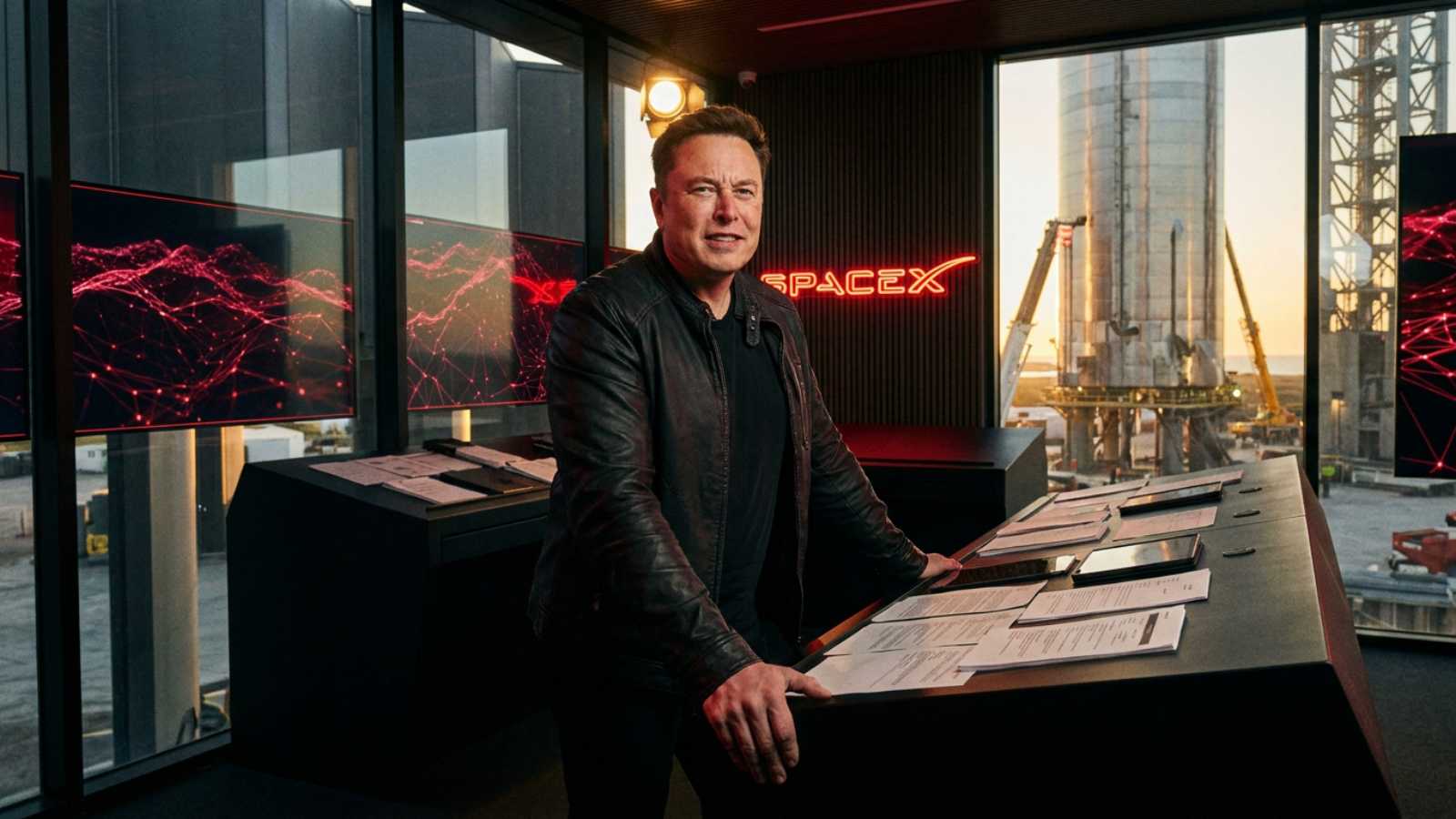

Pricing Day as Barometer for Global AI Infrastructure
June 11, 2026. SpaceX enters the public market. Not through a SPAC backdoor or institutional private placement, but a full pricing day the market has awaited for more than a decade.
The numbers facing investors today: 2025 total revenue of $18.7 billion following full integration with xAI, where Starlink contributed $11.4 billion of the total with $4.8 billion operating income. That composition speaks louder than any roadshow narrative. More than 60% of SpaceX revenue now comes not from rockets, but from orbital connectivity already operational globally and already generating positive margins.
This pricing day is not just about the valuation of one company. It is a recalibration moment for the entire ecosystem of global AI infrastructure investment, from established hyperscalers to the IPO pipeline queued behind them.
Anatomy of $18.7 Billion: Revenue Defining a New Template
The best way to read SpaceX's numbers is not by looking at the total, but by breaking down the composition.
From $18.7 billion in 2025 revenue, Starlink stands alone at $11.4 billion. The remaining roughly $7.3 billion covers launch services, government contracts (NASA, DoD), and other segments. Which means the business that has long defined SpaceX's public identity—launching rockets—is now a minor segment in the company's revenue portfolio.
$4.8 billion operating income from Starlink is the number that will be quoted repeatedly throughout the week. Not because it is large in absolute terms compared to existing hyperscalers, but because it proves something long questioned: can an orbit-based infrastructure layer generate real operating margins before the market saturates? The answer is already here.
Integration of xAI into the SpaceX ecosystem adds a new dimension. This is not merely an acquisition for diversification. Starlink as a connectivity layer with xAI as an AI services layer above it forms a vertical stack no other player possesses: from orbit to inference, single ownership, single pricing strategy.
Starlink as AI Infrastructure Layer, Not Just Broadband
The common misframing: Starlink viewed as internet service for remote areas unreached by fiber. That framing is not entirely wrong, but far too narrow to understand its position within the context of 2026 AI infrastructure buildout.
Three layers are relevant:
First, global connectivity with irreplaceable footprint. Starlink reaches regions economically unlikely to ever attract terrestrial fiber investment from any provider: international waters, mountain ranges, remote industrial sites, and many developing countries in Africa, Central Asia, and Latin America. This is not a marginal target market; this is an enterprise segment that literally could not fully adopt cloud until now due to connectivity barriers.
Second, Low Earth Orbit as an AI inference distribution platform. LEO constellations have latency characteristics distinct from GEO (geostationary orbit). The technical argument that Starlink can serve as a carrier for edge AI inference—bringing trained models closer to end users without always routing back to a data center on another continent—grows stronger as satellite count and capacity increase.
Third, monetizing AI above an existing customer base. xAI integration gives SpaceX an AI asset it can immediately offer to existing Starlink subscribers, both enterprise and residential. Cross-sell velocity from running infrastructure far exceeds customer acquisition built from zero.
If Starlink can generate $4.8 billion operating income from infrastructure requiring thousands of rockets and satellites to build, investors start asking one uncomfortable question for terrestrial hyperscalers: why do they get to monopolize premium AI infrastructure multiples?
IPO Signal: What the Market Is Reading Today
SpaceX is not an ordinary company going public. For more than a decade, its status as a private company meant valuations were always speculation in secondary markets. When public pricing occurs today, several signals immediately transmit to the broader ecosystem.
First Signal: Infrastructure Profitability Can Be Validated
Capital markets have long been skeptical of AI infrastructure plays because of one fundamental concern: capex is enormous, payback periods unclear, and competition from entrenched incumbents with scale economies cannot be ignored. Starlink with $4.8 billion operating income flips that narrative empirically. Infrastructure layers can be profitable before markets saturate.
Second Signal: AI-and-Infrastructure Mergers Earn a Premium
xAI integration into SpaceX is not an ordinary acquisition decision. It is a blueprint that AI companies with or tightly integrated to infrastructure layers will receive different valuation multiples than pure-play AI software. Investors will begin discounting AI companies lacking a "distribution moat" made of real, tangible physical infrastructure.
Third Signal: Template for the Next AI IPO Wave
The question circulating most among major portfolio managers today is: when do OpenAI, Anthropic, or other major AI players go public, and what is fair valuation? SpaceX pricing day provides one concrete reference point. Not because their businesses are identical, but because the market now has actual numbers from an AI-era company newly entering the public market with solid revenue and profitability.
| Valuation Dimension | SpaceX / Starlink | Pure-Play AI Software | Established Hyperscaler |
|---|---|---|---|
| Revenue base (2025) | $18.7B (based on pricing day data) | Startup to mid-cap, majority not yet at this scale | Tens of billions USD |
| Operating Profitability | Positive from Starlink ($4.8B OI) | Majority still negative or thin | Strong margins; AI segment still in investment phase |
| Infrastructure Ownership | Orbital constellation + ground stations | Data center via partnership/leasing | Data center owned and operated in-house |
| AI Component | xAI fully integrated | Core product or primary service | AI as services layer above cloud platform |
| Capital Intensity | Very high (rockets, satellites, replenishment) | Medium to high (GPU clusters) | Very high (real estate, servers, fiber, cooling) |
| Public Market Precedent | First occurred in June 2026 | Majority not yet IPO'd | Established, valuations stable for years |
New Strategic Pressure on Hyperscalers AWS, Azure, and GCP
AWS, Microsoft Azure, and Google Cloud enter 2026 with massive capex commitments for AI infrastructure. The numbers they disclosed in recent earnings calls reflect conviction that terrestrial data centers remain the heart of global AI compute. SpaceX's IPO introduces a new variable not easily dismissed.
The first pressure comes from access to markets previously unreachable by hyperscalers. Many enterprise customers in offshore energy, maritime operations, remote industrial, and government sectors across regions cannot fully adopt cloud not by choice, but due to connectivity bottlenecks. Starlink removes that barrier while simultaneously offering xAI AI services above the same connection. This is not merely backup internet; it is a gateway to previously closed markets, paired with AI upsell already available.
The second pressure is more nuanced: repricing margin expectations in investor minds. If orbital infrastructure with far more visible and dramatic capex (literally launching rockets to space) can generate $4.8 billion operating income, institutional investors will scrutinize AI infrastructure profitability figures from hyperscalers more critically. Not that AWS or Azure face existential threat. But their premium multiples could face compression if a new narrative emerges more compelling on capital deployment efficiency in AI infrastructure.
No hyperscaler can ignore what happens today. Some possible strategic responses: accelerating partnerships or acquisitions in satellite connectivity areas (Amazon Kuiper is already underway), clarifying AI infrastructure profitability segmentation in financial reporting for better investor transparency, or reinforcing ecosystem lock-in narratives no infrastructure layer can replicate.
Structural Risks That Cannot Be Overlooked
No IPO is clean of risk. SpaceX carries some unique ones worth calculating clearly.
Founder control concentration. Elon Musk retains significant control within the company's governance structure. Public investors in companies with extreme founder control have already felt how volatility does not always correlate with business fundamentals. Every policy, public statement, or action tied to Musk personally carries spillover potential to stock price not present in companies with more distributed governance.
Cross-jurisdictional regulatory exposure. Starlink operates on nearly every continent and faces varying regulations in each market: spectrum management from ITU and national regulators, increasingly strict de-orbiting requirements as LEO density grows, data residency requirements in the EU, India, and other major markets, plus geopolitical pressure that could complicate operations in certain regions.
Capex replenishment with no end in sight. LEO constellations have limited satellite operational lifespans. This means the public company must continually justify large capital spending for replacement launches, something that could become a flashpoint with shareholders preferring capital returns over satellite launches.
xAI integration execution. Mergers are one thing. Operational integration yielding concrete revenue synergies is another and requires sustained, consistent execution. Markets will monitor whether the 2025 figures serving as today's pricing basis can grow organically post-IPO, or whether there is an element of "peak narrative" in those numbers.
Competition from OneWeb, Amazon Kuiper, and government-backed satellite broadband initiatives from China is not static. The LEO market that appears today as Starlink dominance could shift character within 5-7 years if competing constellations reach operational maturity.
One Pricing Day, Consequences Extending Beyond Opening Price
SpaceX's opening stock price today will be quickly forgotten. What endures is what gets presented to the market as underlying fundamentals: $18.7 billion revenue with Starlink as a proven profitability engine.
Several consequences likely to register within 12-24 months are structural in nature:
-
Valuation anchor available for AI infrastructure companies in the IPO pipeline. Private companies previously without public comparables in their category now possess a concrete reference point for institutional investor roadshows.
-
Capital allocation shift from pure-play AI software to infrastructure-adjacent plays becomes increasingly sound. Fund managers who previously avoided capital-intensive AI infrastructure due to profitability concerns have one new data point to revise their thesis.
-
Transparency pressure on incumbent hyperscalers will intensify. Investors will begin demanding more detailed segmentation of AI infrastructure profitability versus traditional cloud services, not merely aggregate reporting mixing everything together.
-
Competition in still-undefined frontiers will grow fiercer. Edge AI, satellite-delivered compute, and hybrid infrastructure combining orbit with terrestrial ground are categories without established market leaders. With SpaceX as a public company, capital to contest these categories becomes more accessible and competition sharper.
The narrative that AI can only be distributed efficiently through terrestrial hyperscalers now faces a challenger already listed on an exchange with a solid revenue track record. That implication matters far more than any opening stock price that will appear today.
Share Article
Share
Disclaimer
All content presented in this article is for informational purposes only and should not be considered as financial advice. The author and publisher are not licensed financial advisors. Any investment decisions made by readers are personal choices, and all risks are solely borne by the reader. We strongly recommend conducting independent research and consulting with a licensed financial advisor before making any financial decisions.