US-Iran Agreement: Impact of Strait of Hormuz Reopening on Global Energy Markets and Trade Routes
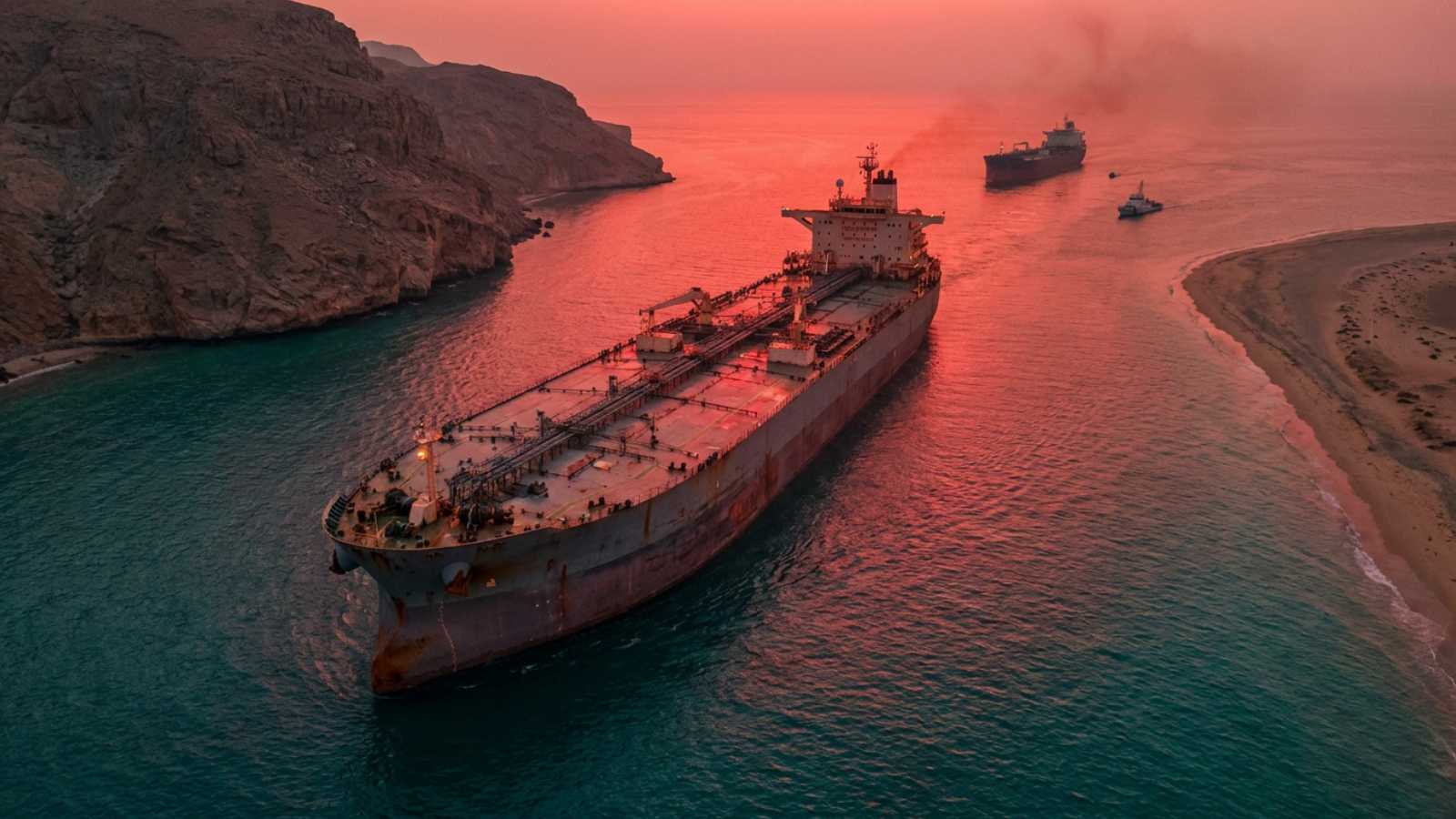

June 14 Announcement That Moved Global Energy Markets
On June 14, 2026, a framework agreement was announced between the United States and Iran in Geneva. Within hours of the announcement, oil prices fell more than $4 per barrel. Global equity markets surged. Commodity traders who had spent months preparing for escalation scenarios suddenly recalculated their positions.
The agreement encompasses 3 publicly identified components: a 60-day ceasefire extension, the reopening of the Strait of Hormuz beginning June 19, 2026, and the start of nuclear talks and sanctions reduction negotiations. This is not a permanent peace agreement. But for global energy markets, the signal that the world's most critical maritime corridor would return to normal operations was enough to move billions of dollars in a single trading session.
Strait of Hormuz: Why One Waterway Dictates Global Energy Prices
It measures only about 21 miles at its narrowest point. Iran on one side, Oman on the other. Yet through this narrow corridor flows more than one-fifth of global petroleum trade, plus roughly 30 percent of all liquefied natural gas (LNG) shipments worldwide.
There is no practical alternative route for volumes of that scale. Saudi Arabia's Petroline pipeline can divert a small portion of exports, but its capacity falls far short of replacing the full flow through the Strait of Hormuz. This means any disruption at this chokepoint, whether from military exercises, geopolitical tension, or open conflict, is felt immediately at gas pumps in Tokyo, Rotterdam, and Houston.
Disruptions to the Strait of Hormuz are not new. History records the Tanker War of the 1980s, a series of tanker incidents between 2019 and the early 2020s, and various episodes of tension, each triggering spikes in maritime risk premiums. Each time tension rises, markets respond by raising prices as geopolitical risk premiums are priced in. And when tension eases, the effect works just as fast.
The period before the June 2026 agreement forced the shipping industry into defensive mode. Tankers were hit with war risk insurance premiums that burdened every shipping contract through the region. Some Asian buyers began exploring alternative supplies from more distant and expensive sources. LNG delivery schedules suffered disruptions that cascaded into electricity prices across several Asian markets.
Three Components of the Framework Agreement
Based on information released on June 14, 2026, this agreement is not a final pact but a framework that opens the door to more substantive negotiations.
First: A 60-day ceasefire extension. This gives both sides space to negotiate without pressure for military escalation. In the context of a conflict that has pulled in wider regional dynamics, this ceasefire carries implications that extend beyond US-Iran bilateral relations alone.
Second: Reopening of the Strait of Hormuz beginning June 19, 2026. This is the element with the most direct impact on commodity markets. The specific date sends a calibration signal to oil traders, logistics planners, and marine insurance companies that commercial flow will be restored within days.
Third: Nuclear talks and sanctions negotiations. This is the most complex and most uncertain part of the diplomatic construct being built. It determines whether this framework evolves into more permanent normalization or remains merely a temporary pause.
Negotiations are taking place in Geneva, following established patterns of multilateral diplomacy. US involvement is not merely as mediator but as a directly interested party, given the agreement's implications for Washington's regional alliances, American domestic energy prices, and US strategic positioning in the Middle East.
Market Reaction: When Diplomacy Has Measurable Economic Value
The more than $4 per barrel oil price drop in a single day reflects the unwinding of geopolitical risk premiums embedded in prices. This move comes from 2 sources operating simultaneously: first, normalization of physical supply expectations after the Strait of Hormuz was scheduled to reopen June 19; second, reduction in the uncertainty premium that had previously forced traders to demand extra compensation for regional uncertainty.
| Market Segment | Direction | Market Logic |
|---|---|---|
| Crude Oil Price | Down $4+ per barrel | Loss of geopolitical risk premium |
| Global Equity Markets | Strengthened (surged) | Risk-on sentiment, expectations of stable energy supply |
| War Risk Marine Insurance | Expected to decline gradually | Hormuz route returns to normal status |
| Aviation Sector | Positive | Potential reduction in jet fuel costs |
| Industrial & Manufacturing Sector | Positive | More predictable energy cost inputs |
| Oil Exporting Nations | Mixed | Oil revenue-based fiscal income under pressure |
The spillover effects are uneven. Net energy importing countries, such as Japan, South Korea, and much of Europe, get relief from lower prices. Meanwhile, countries dependent on oil exports for fiscal revenue must recalculate budget projections. This is the familiar zero-sum of energy geopolitics: relief for importers typically means pressure for exporters.
Winners and Recalculators
This framework agreement does not occur in a vacuum. A range of regional and global players are directly affected, each with their own interest calculations.
The United States scores a near-term diplomatic win: energy prices fall, regional tensions ease, and Washington's position as an effective peace broker strengthens. But Washington must also manage Tel Aviv's expectations and convince Gulf partners that sanctions reduction against Tehran does not fundamentally shift regional power balance.
Iran gains 2 things it badly wants: serious sanctions negotiations and de facto acknowledgment that Washington is willing to negotiate without regime change preconditions. But Tehran faces pressure from hardline domestic factions that see any compromise as weakness.
Gulf states, especially Saudi Arabia and the UAE, occupy a more complex position. Strait of Hormuz stability is existential to them since nearly all their oil exports transit this route. Yet US-Iran normalization could shift regional power dynamics that have previously favored their position versus Tehran.
China and India, as the 2 largest oil buyers in the world, have direct interests in Strait of Hormuz stability. Both consistently support diplomatic channels because energy supply disruptions directly hit their industrial production costs. This normalization aligns with Beijing's and New Delhi's strategic interests.
Europe welcomes the reduction in energy pressures that have been a structural inflation factor since 2022. Europe's energy market, undergoing major restructuring after Russia's invasion of Ukraine, gains additional breathing room from Strait of Hormuz normalization.
International Shipping Routes: More Than Just Oil
The Strait of Hormuz is not just about crude oil. Container ships carrying manufactured goods transit this route, LNG tankers carry liquefied natural gas for Asian power plants, and service vessels support the broader Gulf region economy.
When this route is threatened, impacts ripple through global supply chains. Marine insurance companies levy war risk surcharges that burden nearly every shipping contract through the region. Rerouting vessels adds transit time and significant fuel costs. Some major shipping operators delayed slot bookings for routes through sensitive areas.
The scheduled June 19 reopening sends a signal to the shipping industry that normal commercial operations can resume being planned. The impact extends to:
- Freight rates expected to decline as war risk surcharge pressures ease
- Ship insurance costs likely to normalize gradually once field conditions confirm stability
- LNG delivery schedules to Asian buyers who may have been waiting for delayed shipments during the tension period
- Spot oil contracts whose prices immediately reacted to the June 14 announcement
Nuclear Negotiations and Sanctions: Long-Term Unfinished Business
The third component of this framework is the most uncertain and most decisive in determining whether this agreement has staying power.
A framework agreement is not a final pact. It is a bridge to more substantive negotiations, and every bridge is only useful if both ends are willing to step forward.
Iran's nuclear negotiation history provides critical context. The JCPOA signed in 2015 showed that comprehensive agreements require years of exhausting technical negotiations, involve multiple parties, and are extremely vulnerable to domestic political shifts. When the US withdrew in 2018, the impact rippled through the entire regional security architecture. The June 2026 Framework Agreement reopens a door that was once shut, but the path behind it is no easier.
Critical variables that will determine whether this framework evolves into a substantive agreement:
- Uranium enrichment levels Iran is willing to cap, and verification mechanisms the IAEA will accept
- Sequencing of sanctions: Tehran wants sanctions lifted first, Washington wants nuclear commitments first
- Scope of sanctions: nuclear-related sanctions only, or including sanctions related to Iran's support for regional proxy groups
- Israel's position: Tel Aviv has long been skeptical of any deal that does not include a complete halt to Iran's nuclear program
- Iran's internal stability: negotiations in Geneva must secure political legitimacy from different factions within Tehran
Risks That Remain: 60 Days Is a Short Window
60 days is enough to give markets short-term relief, but not enough to resolve the structural issues underlying the conflict. Markets typically overreact in both directions when big news hits. The $4+ per barrel drop in one day reflects rapid repricing, not confirmation of permanent resolution.
Experienced traders know the next price trajectory will be determined by whether field implementation matches the schedule. Some risk scenarios worth monitoring:
- Implementation failure if either side interprets ceasefire terms differently
- Unintended maritime incidents that could be narrated as provocation by any party
- Hardline faction pressure in Tehran that could sabotage the diplomatic process from within
- Third-party actor intervention, such as proxy groups not bound by the US-Iran bilateral agreement
- Nuclear negotiation failure within 60 days that returns conditions to tension
| Historical Precedent | Ceasefire | Final Outcome | Lesson |
|---|---|---|---|
| Iran-Iraq Tanker War (1988) | Permanent via UN resolution | War ended | Resolution requires coordinated international pressure |
| Gulf War (1991) | War ended quickly | Resolution via military coalition | Speed does not guarantee long-term stability |
| JCPOA (2015-2018) | Comprehensive agreement | Collapsed when US withdrew | Nuclear agreements fragile without cross-administration commitment |
| US-Iran Framework (Jun 2026) | 60-day ceasefire | In process | Markets react positively, field implementation still to be proven |
Historical patterns show markets respond quickly to diplomatic signals, but real price consolidation occurs when implementation proves sustainable in the field. Energy markets will watch June 19, 2026 with intense scrutiny: whether the first commercial tanker transits without incident, and whether agreed procedures are enforced by all relevant parties.
Structural Implications for Global Energy Security
Regardless of what happens in the next 60 days, this agreement reinforces several structural lessons about global energy system vulnerabilities.
Risk concentration at chokepoints remains an unsolved problem. The Strait of Hormuz has been known as a critical point for decades. Investment in alternative route diversification remains limited because costs are steep relative to normal conditions. Every tension episode proves this vulnerability, but once tension eases, the urgency to invest in diversification typically fades.
Geopolitics and energy prices cannot be separated. Oil traders have long embedded "geopolitical risk premiums" into their pricing models. Over- or under-estimating the premium creates large swings when events occur. The $4+ drop in one day exemplifies how massive the non-fundamental component is in global oil price formation.
Successful diplomacy has measurable economic value. This is not a normative claim but a market observation: one day after the framework agreement announcement, energy prices fell and equity markets rose. The economic value of trade route stability is large enough to move markets significantly even before implementation occurs.
Every energy crisis strengthens the case for domestic diversification. In Japan, South Korea, and European countries, each time Strait of Hormuz tensions rise, the argument for renewable energy investment, energy efficiency, and supply diversification becomes politically and economically stronger. Dependence on a single route for the bulk of energy supply is a vulnerability with a steep cost when crisis strikes.
The months of tension before June 2026 already forced global buyers to make expensive adaptations: alternative contracts from more distant sources, diversified shipping routes, strategic reserve additions, and aggressive hedging. Those contracts are not immediately canceled when the agreement is signed. Supply chain normalization will unfold gradually, not instantly. This means the full impact of the framework agreement will not be felt all at once but will emerge in stages as field implementation proceeds, further negotiations continue in Geneva, and each industry player recalculates, having spent months adapting to tension conditions.
Share Article
Share
Disclaimer
All content presented in this article is for informational purposes only and should not be considered as financial advice. The author and publisher are not licensed financial advisors. Any investment decisions made by readers are personal choices, and all risks are solely borne by the reader. We strongly recommend conducting independent research and consulting with a licensed financial advisor before making any financial decisions.