US-Iran Military Escalation Continues: Relentless Strikes Amid Faltering Diplomacy

Three Parallel Events That Shaped the Crisis
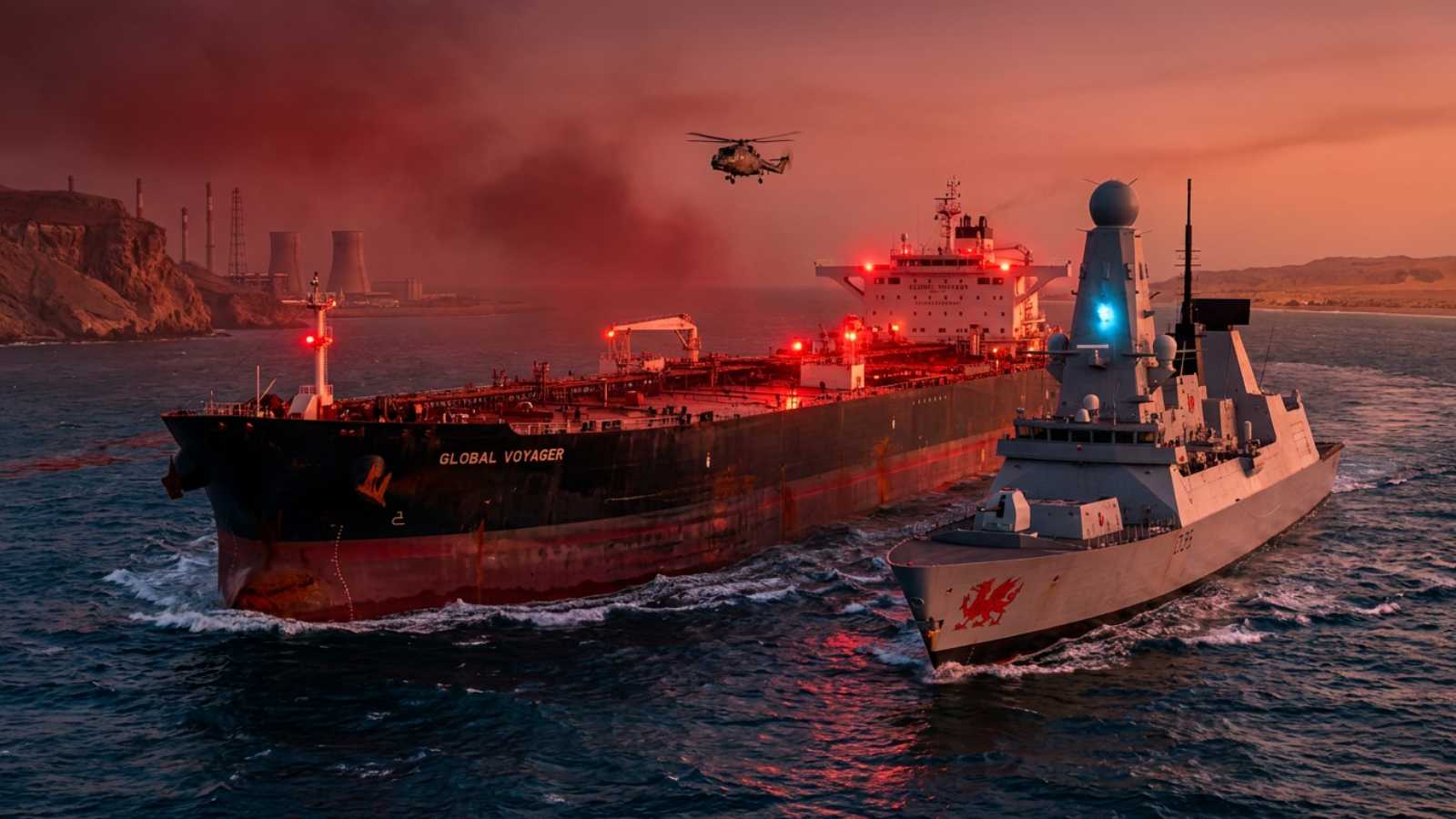
A US military helicopter crashed in the Strait of Hormuz on June 9, 2026. The pilots were reported safe, confirmed by NBC News from statements by US military officials. But Washington did not respond with silence.
US Central Command (CENTCOM) immediately announced a series of strikes against targets in Iranian territory. President Trump chose unambiguous words: quoted by CBS News, he explicitly promised to hit Iran "hard." Washington's official justification for the entire sequence was a response to Tehran's "continuing aggression," with the helicopter incident cited as the latest evidence of a broader pattern of provocation.
What makes this dynamic more complex: while CENTCOM strikes were underway, a Qatari diplomatic delegation remained in Tehran, still active in talks with Iranian officials. 2 paths running in parallel, not sequentially. Airstrikes and negotiations, at coordinates not far apart, at the same time.
As of June 11, 2026, specific details about the targets struck and the scale of damage had not yet been fully verified by independent reporting. But the pattern of movement was clear enough to read: this was not a single isolated incident, this was a multi-round cycle spinning repeatedly.
Why the Strait of Hormuz Is Always a Point of Confrontation
The helicopter incident did not occur in arbitrary waters. The Strait of Hormuz was chosen because of its value that exceeds military calculation, and Iran has long understood this.
At its narrowest point, the Strait of Hormuz is only about 33 kilometers wide. These waters separate Iran to the north from Oman and the United Arab Emirates to the south. Approximately 20% of total global oil trade passes through this route daily, according to data consistently cited by the US Energy Information Administration. Tankers from Saudi Arabia, Kuwait, Iraq, and the UAE all must pass through this strait to reach markets in Asia, Europe, and North America.
There is no equivalent alternative route. Overland pipelines such as the Abu Dhabi Crude Oil Pipeline have limited capacity and cannot replace the volume that normally transits by sea. If navigation through Hormuz were significantly disrupted, there is no bypass button that the global energy market could immediately press.
Iran understands this very well. For years, Tehran has occasionally threatened to close the strait as a pressure card. It has never been fully executed, but the threat itself has been enough to mobilize US naval forces and influence futures oil prices.
When a US helicopter crashed there and CENTCOM responded with strikes into Iranian territory, this conflict could no longer be compartmentalized as a bilateral matter between 2 countries. It touched the interests of every major energy-importing nation on the planet.
Qatar: Mediator Holding the Line
Doha occupies a paradoxical geopolitical position, and precisely because of that, it is extremely useful in situations like this.
On one hand, Qatar hosts Al Udeid Air Base, the largest US military facility in the Middle East region, which houses thousands of American personnel and air assets. On the other hand, Qatar maintains communication channels with Iran that have functioned for years, long before current tensions reached their present level.
This combination is not historical accident. Qatar deliberately built itself as an acceptable mediator to all parties. This strategy has proven effective before: Qatar was involved in facilitating negotiations between the US and Taliban in Afghanistan, in hostage exchanges between Washington and Tehran, and in numerous other back-channel communications that never made the headlines.
The fact that Qatar's delegation remained in Tehran while CENTCOM launched strikes sent 2 signals at once. First, at least 1 communication corridor remained open. Second, Qatar deemed the effort important enough to maintain even under the most unfavorable conditions.
"We will hit Iran hard." - US President Donald Trump, quoted by CBS News, June 2026.
That statement set the context that burdened every step of Qatar's delegation. Mediators work most effectively when both sides still have incentives to remain at the same table. When 1 side openly announces its intention to continue escalating military pressure, the remaining negotiating space shrinks drastically. The relevant question is not only whether Qatar can maintain this channel, but whether that channel can produce something concrete before the next escalation closes it completely.
Map of Actors and Their Positions
Reading this crisis requires understanding where each major player stands and what each actually pursues.
| Actor | Role | Current Position | Primary Interest |
|---|---|---|---|
| United States | Active military power | CENTCOM strikes; Trump: "hit hard" | Deterrence of Iran, security of navigation in Hormuz |
| Iran | Target and challenging actor | Claims defensive action, negotiations via Qatar | Sovereignty, nuclear program, regional influence |
| Qatar | Key back-channel mediator | Active diplomatic delegation in Tehran | Regional stability, strategic relationship with US |
| Israel | US ally with direct interests | Active monitoring, no overt official position | Iran's nuclear program, missile threat |
| Saudi Arabia | Gulf oil exporter | Careful calculation between economics and geopolitics | Security of oil exports via Hormuz |
| European Union | Energy consumer, diplomatic actor | Calls for de-escalation, own communication channels | Energy supply security, regional stability |
| India | Major oil importer | Monitoring supply impacts, proactive diversification | Oil supply resilience from the Persian Gulf |
| China | Iran's trading partner, strategic rival of US | Ambiguous position, interests on both sides | Energy access, regional influence |
Energy Implications That Cannot Be Ignored
Every military confrontation around the Strait of Hormuz immediately activates geopolitical risk premiums in global energy pricing. The transmission mechanism is straightforward: tanker operators raise costs, maritime insurance firms tighten policy terms for conflict zones, and futures markets recalculate the probability of supply disruptions.
For Japan and South Korea, 2 major economies that import nearly all their oil needs, this situation is not distant geopolitical abstraction. Security of supply is a direct domestic issue for Tokyo and Seoul. Escalation that disrupts Hormuz navigation even in the short term could force both nations to activate their strategic reserves.
India occupies a more layered position. The country is one of the world's largest oil importers while also maintaining economic relations with Iran through the Chabahar trade route. Escalation involving Iran directly hits New Delhi's energy and diplomatic calculations from 2 directions simultaneously.
Europe faces a different but equally critical calculation. After years of rebuilding its energy resilience following the Russian gas crisis, the continent is now more dependent on LNG from Qatar and the United States. Qatar, currently active as a mediator in the US-Iran crisis, is in a position where broader regional instability, even if not directly threatening Doha, still influences financial markets' risk perception of LNG supply to Europe.
The global financial community has not fully factored worst-case risk premiums into asset prices. Markets typically respond to events that have already occurred, not those that might occur. But the distance between "potential" and "actual" grows thinner each time this escalation cycle spins another round.
3 Structural Factors That Make This Crisis Different
This crisis is not a tactical escalation that can be resolved with 1 simple ceasefire agreement. There are 3 deeper structural factors that are more difficult to negotiate.
Iran's nuclear program remains an unresolved issue. The 2015 nuclear agreement (JCPOA) ceased functioning long ago after the US withdrew during the first Trump administration, and Iran subsequently violated the technical limits established. Efforts to revive an equivalent framework never reached a signing point. As long as ambiguity over Iran's nuclear status remains unresolved, Washington will continue to view military options as a legitimate instrument in its pressure policy.
Iran's dispersed proxy network means that every strike against Iran could potentially trigger responses from actors not entirely under Tehran's control. Hezbollah in Lebanon, militia groups in Iraq, Houthis in Yemen, all have the capacity to respond relatively independently and expand the conflict across multiple fronts simultaneously. CENTCOM strikes on Iran speak not only to Tehran; they also signal the entire ecosystem of Iran-affiliated actors across the region.
US domestic political dynamics do not create strong pressure toward de-escalation in the short term. Trump's hardline rhetoric toward Iran has been consistent for years. Military shows of force are something politically expensive to walk back without something that can be presented as victory to domestic public opinion. Qatar can help open the door to diplomacy, but closing the military door requires calculations and incentives different from what currently exists in Washington.
Risk of Escalation Beyond Control
What most concerns regional defense analysts is not the attacks that have already occurred. What is more dangerous is the potential for miscalculation: 1 incident interpreted differently by 2 parties already in high-alert conditions, triggering a response that exceeds the limits that were meant to be maintained.
The Middle East already carries layered burdens. The Israel-Gaza conflict still leaves open wounds. Tensions in Lebanon have several times approached outright escalation. Houthis in Yemen continue to attack commercial shipping lanes in the Red Sea. Adding direct US-Iran confrontation to this equation is not merely adding 1 new variable; it is an exponential multiplication of complexity and risk.
Miscalculation in the Strait of Hormuz could trigger simultaneous responses from Iran's proxy network in Iraq, Lebanon, and Yemen. A coordinated multi-front escalation is the scenario most difficult to manage while also the most likely if diplomatic channels are severed completely.
Iran has the capacity to significantly disrupt navigation in the Strait of Hormuz using a combination of sea mines, anti-ship missiles, and fast attack craft. This is not newly developed capacity; this capacity already exists and has been assessed by Western intelligence communities for years. Its relevance increases dramatically when tensions are at current levels. Every tanker transiting Hormuz under these conditions is a potential next flashpoint.
There are 3 scenarios currently most discussed among foreign policy analysts. First scenario: Qatar successfully mediates a pause long enough to begin substantive talks, potentially around a new nuclear framework. Second scenario: limited escalation continues in a carefully managed tit-for-tat pattern, keeping the conflict below the threshold of outright war. Third scenario: 1 major incident, such as the sinking of a military vessel or significant loss of life, pushes both sides past the limits that have been maintained.
The third scenario is the most feared because it is most difficult to control once triggered. Once full-scale war between the US and Iran begins, escalation logic takes over and the rational calculations of both sides become far less reliable.
Qatar's delegation in Tehran is 1 of the few things that can currently slow this spiral. How long they can hold that position, and whether there is sufficient political will from both sides to transform talks into something more than merely delaying the next shot, are the variables that will determine whether this crisis finds a de-escalation point or instead spirals into a more dangerous phase.
What is clear: neither side appears to be in any rush to hit the brakes.
Share Article
Share
Disclaimer
All content presented in this article is for informational purposes only and should not be considered as financial advice. The author and publisher are not licensed financial advisors. Any investment decisions made by readers are personal choices, and all risks are solely borne by the reader. We strongly recommend conducting independent research and consulting with a licensed financial advisor before making any financial decisions.